
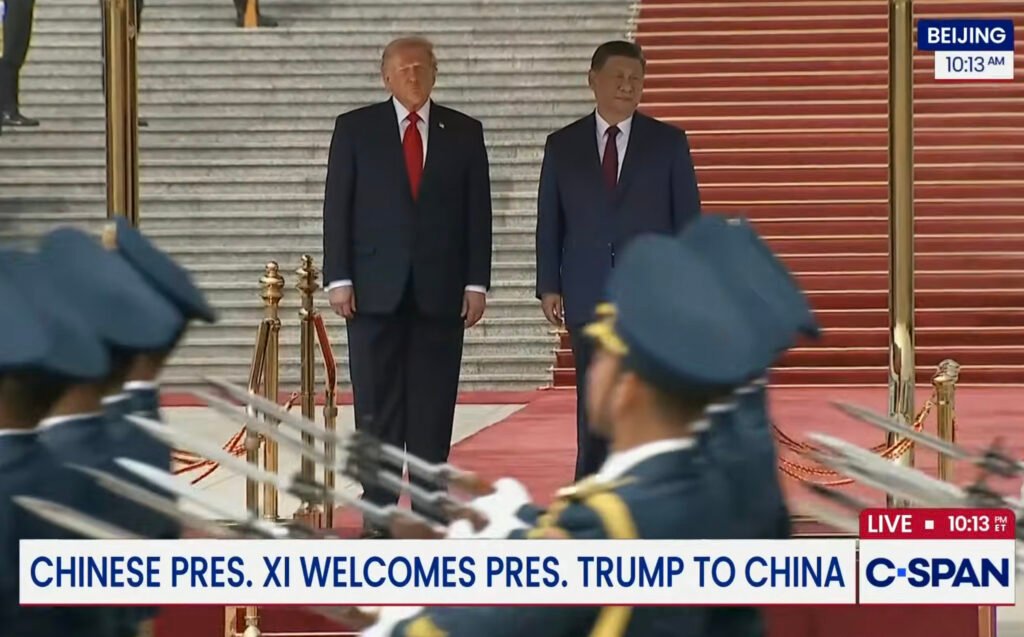
President Donald Trump lands back in the United States after a high‑stakes China visit, and the real test of his trip will come from tangible outcomes.
Trade promises and industry response
In a Fox News interview with Sean Hannity, Trump outlined a series of Chinese pledges to purchase American oil, soybeans and Boeing aircraft.
Tim Stewart, president of the U.S. Oil and Gas Association, said the commitment would be meaningful only if realized, noting that China “needs crude” and that U.S. supplies cost more than alternatives.
Stewart added that with Venezuela and Iran unable to provide discounted oil, the United States becomes the logical source, making the promise a win for American producers.
He warned that the deal hinges on China’s willingness to follow through, but said a reciprocal restriction on critical mineral exports will give the United States leverage.
Boeing and the American Soybean Association, identified as beneficiaries, have not yet responded to requests for comment.
Strategic negotiations and broader context
Trump traveled with a roster of CEOs, each required to bring a specific “tangible ask” for China, a condition that shapes future agreements.
Separate talks involving Cuba, where a fuel shortage stems from U.S. sanctions, and CIA Director John Ratcliffe’s meetings with Cuban officials have produced no clear results.
Xi Jinping cautioned Trump that mishandling the Taiwan issue risks triggering conflict, a warning that reflects longstanding tensions.
Trump also said Xi promised to halt weapons sales to Iran, a claim that will require verification on the ground.
Analysts note that the announced trade commitments are positive, but the lack of immediate, verifiable actions leaves the overall impact uncertain.

