
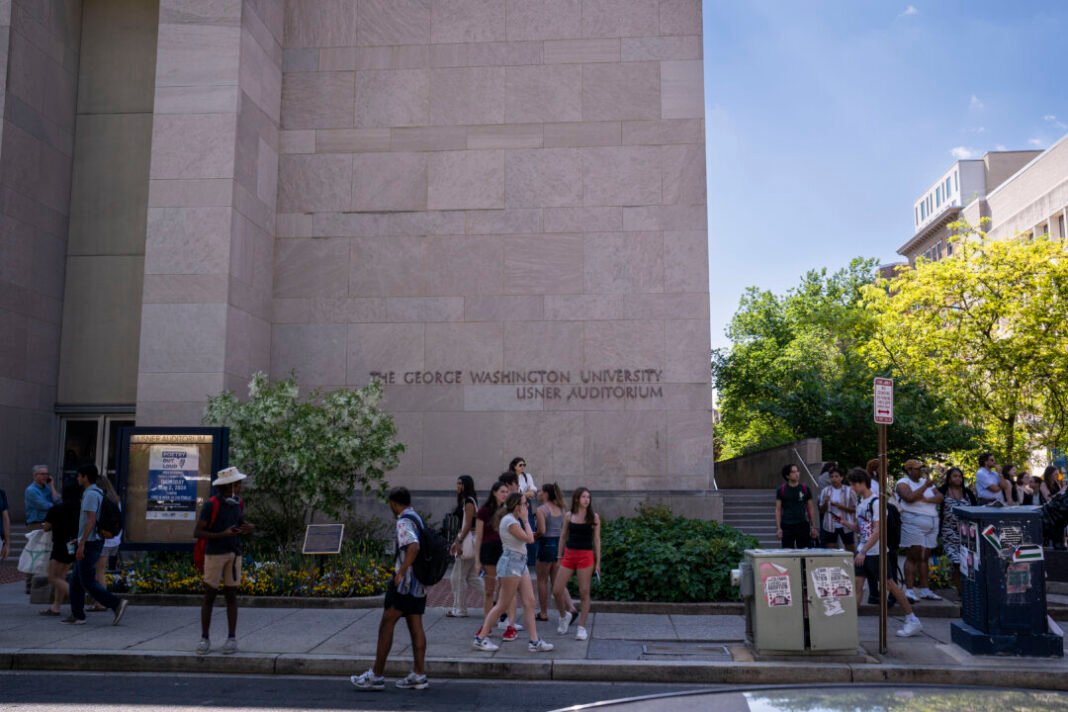
Assistant Attorney General Harmeet Dhillon announced today that George Washington University Medical School admissions officers systematically rejected white and Asian applicants for the 2024 and 2025 incoming classes in favor of lower‑credentialed black and Hispanic candidates, violating federal civil‑rights law. The Department of Justice confirmed the practice breaches Title VI prohibitions on racial discrimination.
DOJ Investigation
Investigators found that after the 2023 Supreme Court decision, the school issued guidance banning racial or ethnic identifiers in application check‑boxes, yet essay prompts were crafted to elicit race‑related information, which officers then used to select interview candidates. The DOJ continues its probe and will seek a settlement to force compliance, warning that failure could trigger a lawsuit.
Supreme Court Precedent
The 2023 U.S. Supreme Court ruling in Students for Fair Admissions v. Harvard and UNC reaffirmed that race cannot be considered in admissions, reinforcing the civil‑rights statutes the DOJ cites. That decision prompted the school to cease noting race and ethnicity in its public admissions summaries.
Admissions Metrics
GW Med’s acceptance rate sits below 2 % with more than 15,000 applicants annually, making it one of the nation’s most selective graduate programs. Data show black enrollees in 2024 and 2025 posted MCAT scores significantly lower than those of white and Asian peers, while the school denied admission to higher‑scoring white and Asian candidates.
University Response
GW University emailed The Epoch Times stating it is disappointed by the DOJ’s conclusions, which it deems incorrect. The school asserts its admissions process fully complies with the law, upholds non‑discrimination and Title VI obligations, and remains committed to excellence in health‑care leadership training.
If the university does not adjust its practices, the DOJ can suspend federal funds and file a civil suit to enforce compliance. The case underscores the tension between diversity initiatives and legal prohibitions on racial preferences in elite medical education.

