
A New York Times investigation reveals that political campaigns are secretly paying social media influencers to push candidates online without disclosing the deals. The probe found payments flowing to high‑profile creators, blurring the line between organic content and campaign advertising.
Hidden Money in the Feed
Josh Greene, a left‑wing commentator with nearly 800,000 followers, received payments from at least seven candidates or their affiliated groups this election cycle. In February he told his audience that California gubernatorial candidate Tom Steyer was not the progressive figure he claimed to be, then accepted $21,500 from Steyer’s campaign in May and reversed his stance, calling Steyer the strongest progressive option. Greene told the Times he only takes money from candidates he already supports and says the payment did not change his position.
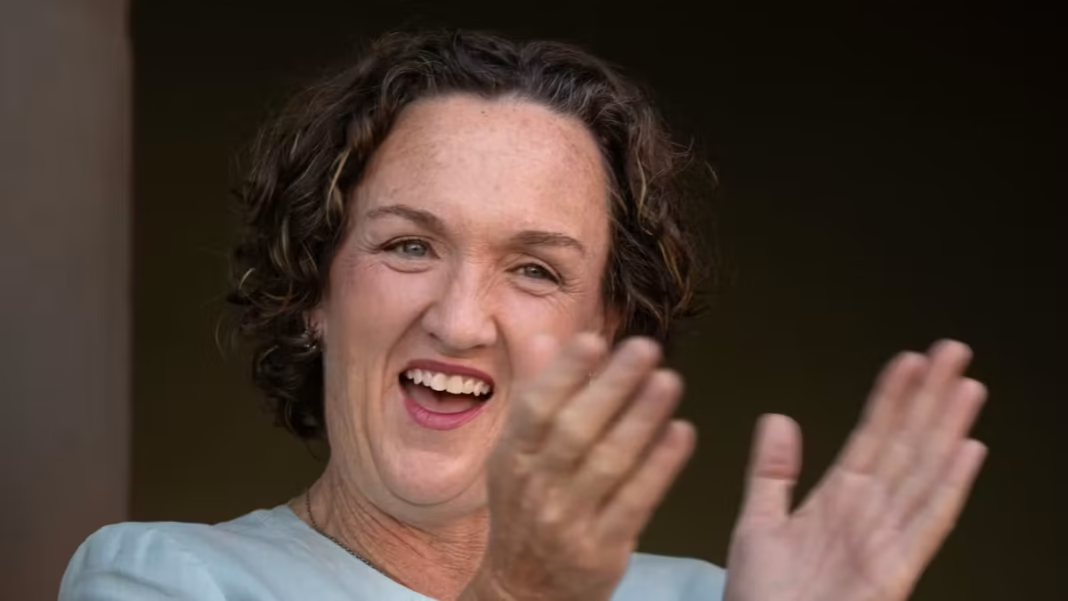
The Times identified similar arrangements across the country. Former California gubernatorial candidate Katie Porter’s campaign paid 12 influencers a combined $139,500, including TikTok creator Avery Cyrus, who earned $25,000 for a single post that was later deleted after the Times contacted her agency. California law requires disclosure of paid political posts, yet several Porter‑supporting messages omitted any disclosure.
Agencies that supply “user generated content” pay smaller creators to produce large volumes of posts that appear organic. One woman paid through SideShift posted videos criticizing living costs in Michigan and, the next day, repeated the same critique in Wisconsin, despite living in Kansas City, Missouri, according to campaign and corporate records.
No federal law mandates disclosure of influencer payments from political campaigns. The Federal Trade Commission requires disclosure of paid endorsements on social media but exempts political messaging, and few states have their own rules, which apply only to state and local races. Campaigns have instructed influencers not to disclose payments, and compensation often moves through layers of vendors and sub‑vendors that obscure the funding source.
Both parties employ this tactic. Representative Barry Moore (R‑AL) filed a Federal Election Commission complaint in June alleging paid accounts attacked his military record during a primary, and a coordinated influencer network boosted Republican Senate candidate Nate Morris in Kentucky earlier this year.
Representative Mark Takano (D‑CA) introduced legislation in June that would require anyone paid by a campaign or political committee to disclose the payment, mirroring existing rules for traditional campaign advertising. Takano warned the bill contains loopholes because campaigns can still hide payments through intermediary vendors.
Rynn Reed, founder of Creator Congress, launched a voluntary code of conduct last month urging creators to disclose payments regardless of legal requirements. She told the Times that without clear standards the industry risks a downward spiral in which nothing can be trusted.

