
Trump’s North Korea Diplomacy Faces New Challenges
President Trump’s decision to cancel a major U.S.–South Korea military exercise shakes the alliance and tests North Korea’s patience. The move signals a retreat from “peace through strength” and raises doubts about Washington’s strategic resolve.
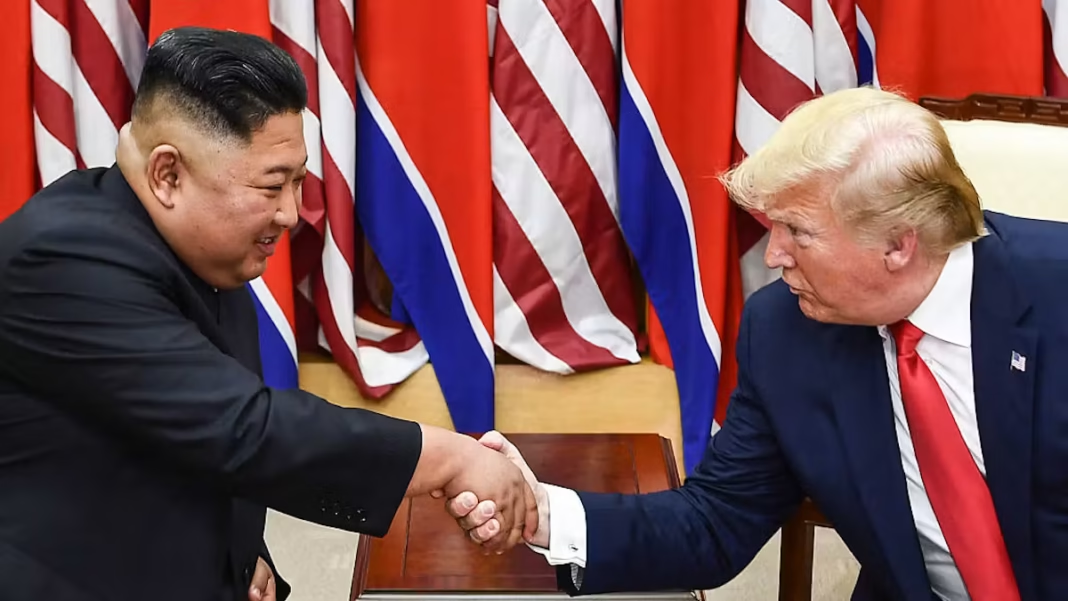
Two historic summits in 2018 briefly turned a 2017 nuclear standoff into diplomatic dialogue. The Singapore meeting in June set a high bar, but the subsequent Hanoi talks collapsed and a DMZ encounter failed to revive the process.
Kim Jong Un has used the past five years to expand his nuclear and missile capabilities, cement North Korea as a permanent nuclear state, and deepen ties with Russia while keeping Beijing engaged. He also rejuvenates his alliance with Russia and ensures Xi Jinping remains invested in preserving Beijing’s influence on the Korean Peninsula.
Trump boasts of a personal rapport with Kim, but that relationship does not alter Pyongyang’s strategic calculus. The dictator prioritizes a survivable nuclear deterrent, coercive leverage, and the ability to deter a preemptive strike.
Pulling U.S. troops from a key annual exercise erodes deterrence and undermines the “peace through strength” doctrine. Analysts warn that reducing military readiness invites aggression rather than encouraging dialogue.
Trump’s social‑media posts also suggest Washington is penalizing South Korea for its reluctance to join a conflict with Iran, a dispute Seoul never approved. The United States has likewise reduced stocks of standoff weapons and missile interceptors, raising questions about its deterrence strategy.
South Korea bears a heavy defense burden and supplies critical industrial capacity, especially in shipbuilding and semiconductors, that bolsters U.S. security. Few allies devote a larger share of their economy to defense, making Seoul an indispensable partner for revitalizing the U.S. defense industrial base.
The cancellation may test whether Kim responds to back‑channel overtures, potentially paving the way for another summit if Trump travels to Asia later this year. It also aligns with Seoul’s push for renewed dialogue, and Kim’s strengthened ties with Moscow and Beijing could make him feel secure enough to engage.
Expectations should stay modest; a new meeting is likely to yield only rhetorical commitments or vague nuclear language that future administrations can discard. Serious arms control remains unlikely, so diplomacy must stay secondary to rebuilding American economic and military strength.
The administration should prioritize executing its trade and investment pact with Seoul, which includes a $150 billion shipbuilding pledge and $200 billion in other sectors. These concrete investments advance U.S. and South Korean interests more directly than symbolic photo ops.
Exporting KN‑23 and KN‑24 missiles and deploying troops has helped sustain Russia’s war in Ukraine, making another Trump‑Kim encounter a secondary strategic priority. Washington must focus on rebuilding the defense industrial base, replenishing munitions, and accelerating modernization rather than chasing diplomatic theatrics.
Trump’s habit of using social media to signal strategic choices risks miscalculating U.S. interests. Keeping diplomacy open while negotiating from strength and reinforcing alignment with South Korea and other Asian allies will better serve American security.
Patrick M. Cronin, Asia‑Pacific security chair at Hudson Institute, underscores the need for a balanced approach. His assessment highlights that strategic patience, not impulsive gestures, should guide policy.

