
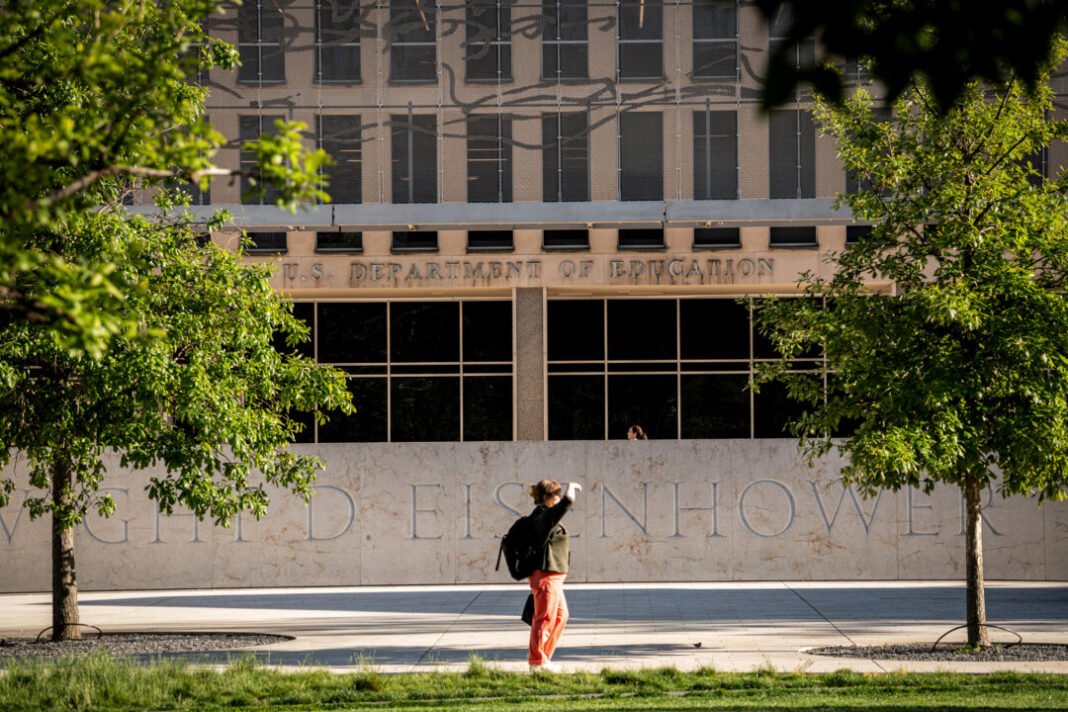
The Department of Education and the Department of Justice have released joint guidance at the start of the school year to help schools prepare for and respond to swatting incidents.
Swatting involves falsely reporting violent crimes such as shootings or bomb threats, prompting law enforcement to converge on a location and disrupt normal school operations, including research activities and thousands of classroom hours.
“Schools often respond with shelter‑in‑place or lockdown orders, which can cause chaos and inflict significant trauma on students, teachers, staff, and families when campuses are unprepared,” the Education Department said in a Sept. 25 statement.
The guidance urges institutions to train staff and administrators to recognize typical swatting characteristics, and to establish procedures that let personnel first assess the threat before determining whether it is a hoax.
Anonymous email services and vague threat language are key indicators of swatting calls, according to the Department of Homeland Security.
The guidance recommends forming partnerships between campus personnel and external law enforcement to handle anonymous threats and conducting drills that familiarize leaders with emergency decision‑making protocols.
Legal Consequences and Legislative Response
Swatting incidents can violate several federal statutes, including Title 18 U.S. Code § 875 (interstate threatening communications), § 1038 (false information knowingly conveyed) and § 844(e) (bomb threats).
Undersecretary of Education Nicholas Kent said the guidance aims to inform institutional responses and support campus communities as swatting incidents have become increasingly prevalent nationwide.
In May 2024, an 18‑year‑old male from Oregon faced charges for making dozens of fake bomb‑threat calls that led to the lockdown of at least 17 high schools in Ohio.
Another perpetrator pleaded guilty in 2024 after a year‑long campaign of false bomb, shooting and other threats targeting schools, churches, government officials and other victims.
Lawmakers are acting to curb the trend. Rep. David Kustoff (R‑Tenn.) introduced the Preserving Safe Communities by Ending Swatting Act last year.
The bill proposes up to 20 years in prison for anyone who carries out swatting calls that cause serious injury, according to a January 2025 statement from Kustoff’s office.
“We can no longer afford to let this dangerous trend go unchecked. This legislation is a critical step toward holding perpetrators accountable, supporting law enforcement, and deterring future incidents,” Kustoff said.
The bill has been referred to the House Committee on the Judiciary.

