
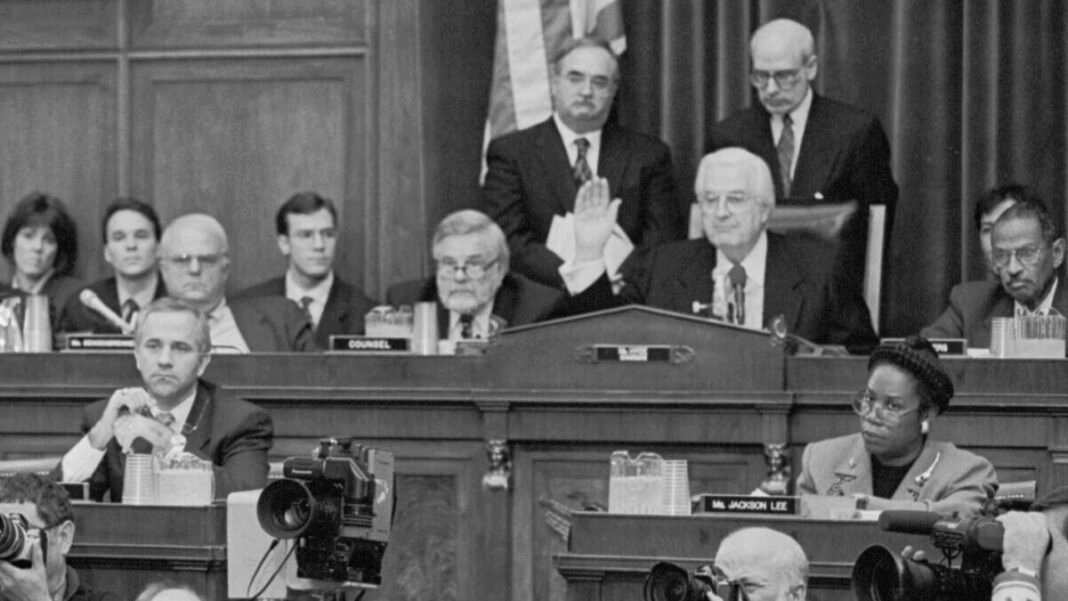
On September 30, 1973, three years after Roe v. Wade, Illinois Congressman Henry Hyde inserted a clause into a health, education, and welfare appropriations bill that still blocks federal funds from covering elective abortions.
The provision, known as the Hyde Amendment, remains in force despite repeated attempts to repeal it.
Hyde, a Catholic pro‑life legislator, argued that taxpayers opposed to abortion should not be forced to fund it with their tax dollars, aligning the policy with earlier efforts to protect unborn life.
Pro‑abortion groups sued and lawmakers tried to strike the amendment, but the Supreme Court upheld it in Harris v. McRae (1980), keeping the clause intact.
The amendment has been credited with saving roughly 2.6 million potential lives, according to a 2009 Guttmacher Institute literature review that found one‑quarter of 38 studies reported statistically significant declines in abortion rates after Medicaid restrictions took effect.
Before Hyde, about 300,000 abortions each year were paid for with federal Medicaid funds; the restriction cut that number dramatically.
Hyde’s faith drove his activism; he warned that the final judgment would find individuals alone before God, but that a chorus of unborn souls would plead for pro‑life advocates, a sentiment he expressed in a 1980s interview.
He insisted that accountability to God would not excuse inaction as millions of lives were lost under the banner of choice.
Hyde’s Faith
Hyde died in 2007, yet his legacy endures; the Supreme Court’s 2022 Dobbs decision overturning Roe built on the legal foundation he helped create.
Pro‑life advocates credit Hyde’s steadfastness and defense of conscience for the Court’s shift toward protecting preborn children.
The amendment’s continued operation promises that future generations will view every life as precious rather than an inconvenience, fulfilling Hyde’s vision.

