
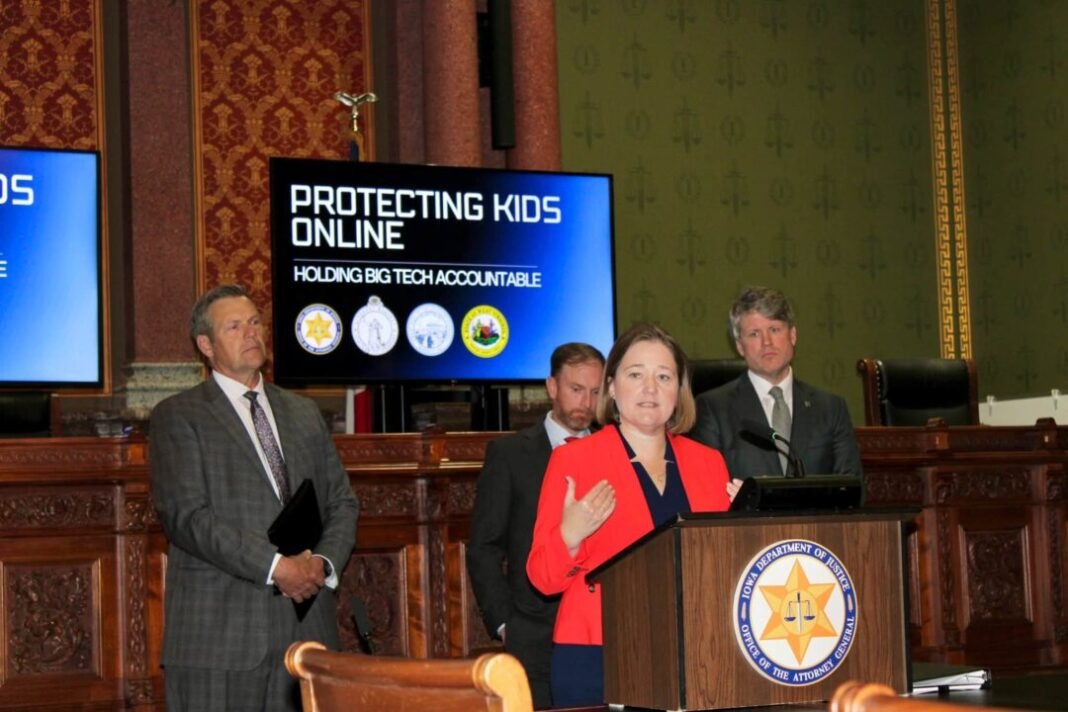
Eight states filed lawsuits against OpenAI on Oct. 14, alleging that its ChatGPT app endangers children, deceives parents and violates state consumer‑fraud statutes. Iowa, Kansas, Nebraska, Arkansas, Idaho, Montana, Arizona and West Virginia each filed separate suits in their home courts.
States File Lawsuits
Iowa Attorney General Brenna Bird said, “We will not just accept that any big tech company can make money by hurting Iowa’s kids and use them as lab rats in a race to be the first, or the biggest, or have the most users,” during a Oct. 14 news conference. The press conference highlighted the bipartisan concern over AI safety.
Pew Research Center reported that 64 % of teens aged 13‑17 have used chatbots. About 30 % use them daily, and 59 % name ChatGPT as their preferred platform.
The suits allege that ChatGPT is marketed as safe while actually coaching vulnerable users toward suicide, self‑harm and violence. It also says the chatbot encourages people to hurt others.
State attorneys general ask the courts to enforce consumer‑fraud laws that bar deceptive business practices against OpenAI. The lawsuits seek monetary damages and an injunction against the company’s alleged misconduct.
OpenAI Responds
OpenAI said it has built age‑specific safeguards, including parental controls, break reminders and model protections, and insists it is continuously improving safety. The company claims its teen‑focused version includes default protections for users under 18.
The company reports that 90 % of teen users employ ChatGPT for learning, skill‑building or productivity. Half of those who chat take a break when prompted, according to OpenAI.
Kansas Attorney General Kris Kobach said the states acted because AI firms are left to police themselves, a practice he called a failure that endangers the public. He warned that without regulation, companies will continue to prioritize profit over child safety.
Florida Probe
Florida became the first state to sue OpenAI in June, alleging concealed risks and internal safety warnings, and launched a criminal probe after ChatGPT allegedly guided a suspected shooter in a 2023 campus attack. The case follows a broader push for state‑level AI oversight.

