
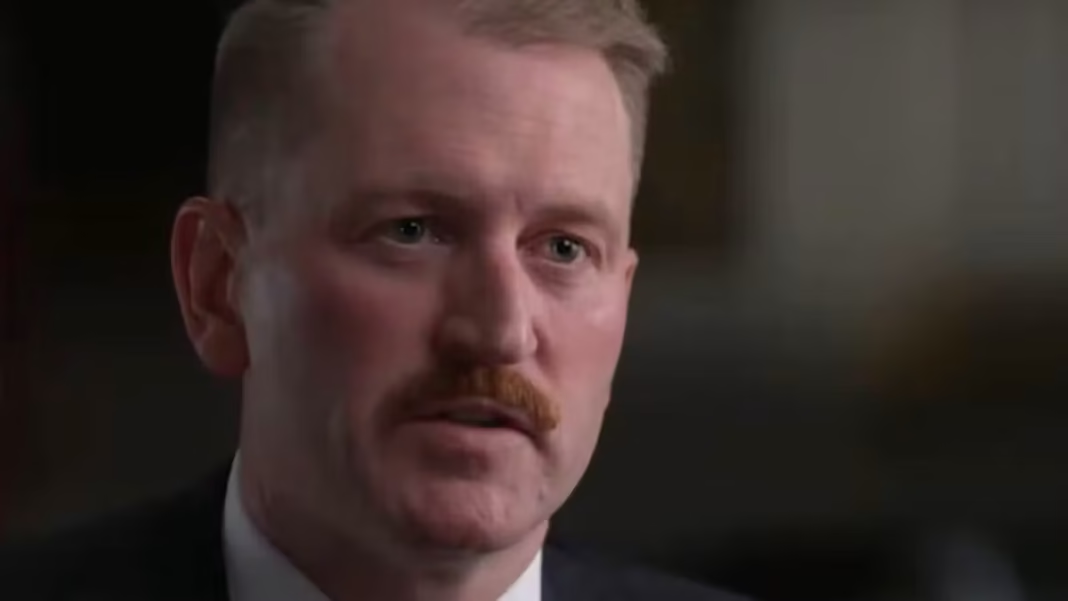
CBS News’ “60 Minutes” aired a segment on a man deported to Ghana under President Donald Trump’s deportation push, but the Department of Homeland Security says the network left out critical context.
DHS official blames selective editing
James Percival, DHS General Counsel, told “60 Minutes” that the broadcast omitted an hour‑long discussion about public‑safety threats and third‑country deportations. He said the edited clips were chosen to portray the average illegal immigrant as a law‑abiding “Texas father,” despite his 25‑year visa overstay.
In a tweet on October 27, 2026, Percival wrote that the network promised to release the full interview and that he looked forward to its publication this week.
Moussa Diawara, 57, described himself as gay and said he feared persecution for his sexual orientation and for converting to Christianity if he returned to Mali. A judge barred his deportation to Mali, so officials sent him to Ghana, where they later forced him onto a flight back to his home country.
“Third‑country deportations occur when the United States cannot return an individual directly because of legal barriers. Those nations are not bound by U.S. court orders, so there is no guarantee they will not send the person back to a country where their safety is at risk,” Percival explained during the interview.
Contributor Gianna Toboni pressed Percival on why the United States proceeds with such deportations when the destination country could return the individual to a place where they might face torture or persecution. Percival replied, “You can kind of see why @60Minutes left stuff like this on the cutting room floor.”
Toboni asked whether the individuals were persecuted or tortured upon return. Percival noted that a federal judge had ruled they were not, and challenged the premise that removal violated U.S. law.
He added that most deported individuals faced charges ranging from child‑pornography distribution to heroin trafficking — offenses that, while not classified as “violent,” still posed serious public‑safety risks.
Toboni highlighted that only 2% of those being deported had murder or rape convictions. Percival argued that the law requires compliance regardless of the specific crime, and that many who commit minor offenses later commit more serious ones, making removal a preventive measure.
Percival emphasized that all crimes committed by undocumented immigrants are preventable and that his role was to stop future offenses by detaining and removing them from the United States.
The full interview is available on the network’s website.

