
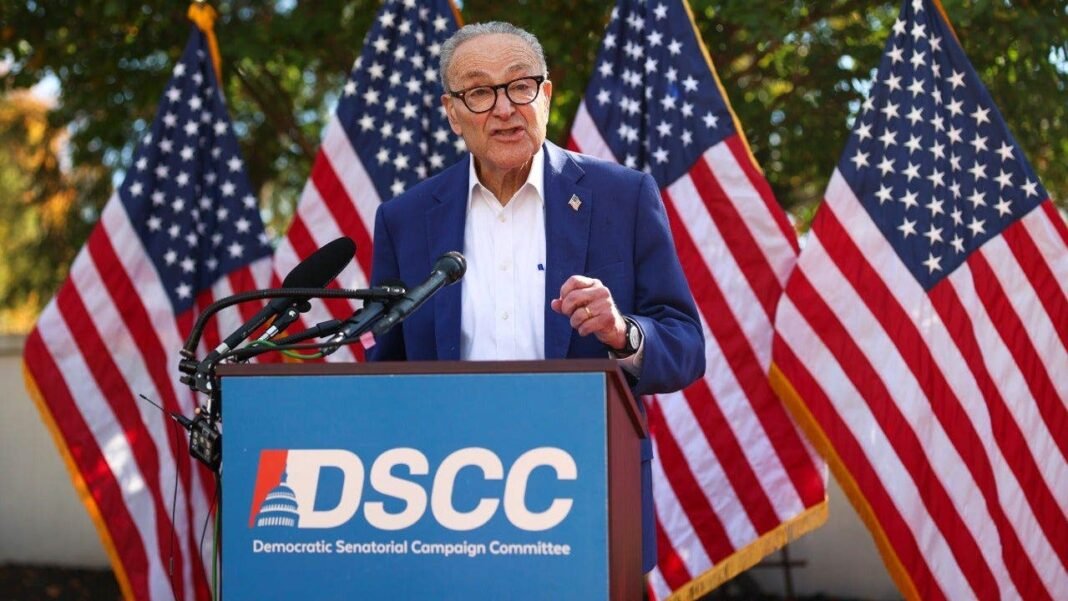
House and Senate leadership elections are already heating up after the midterms, with Mike Johnson ruling out a run for minority leader and Chuck Schumer vowing to stay on as Senate Majority Leader. Sen.-elect Abdul El-Sayed warns he may not back Schumer, while progressives push for new faces.
Internal Leadership Battles
At least five Democratic Socialists of America members threaten to withhold support for Hakeem Jeffries unless he commits to their agenda, a hurdle that could complicate the path to 218 votes needed for speaker. The stance could affect the Democratic effort to secure the first Black House speaker in U.S. history.
Sen.-elect Adam Hamilton and Troy Jackson have already declared they will not vote for Schumer, signaling broader dissent within the Democratic caucus. Their statements underscore a growing demand for generational change.
Schumer says he will be re‑elected as majority leader, needing only 29 votes from his caucus, a threshold he expects to clear despite the internal challenges. He emphasizes focusing on the American people’s priorities rather than leadership disputes.
House Republicans must balance leadership contests with coalition maintenance. Mike Johnson jokes about returning to a lawn business in Shreveport.
The Democratic agenda centers on rolling back the recent omnibus spending bill, renewing expiring Obamacare subsidies, and addressing AI and data‑center concerns that progressives say threaten American jobs. These priorities aim to reshape the economic narrative ahead of the next election cycle.
Democrats also plan votes to end funding for the war in Iran, hoping lower gas prices will ease the cost‑of‑living pressures that dominated the midterm campaign. The move aligns with their broader push to lower household expenses for voters.
Republican Outlook
House Republicans must balance leadership contests with coalition maintenance, as Chris Scalise and Jim Jordan vie for the top GOP role while Mike Johnson jokes about returning to a lawn business in Shreveport. The party seeks leaders who can unite Trump allies and dissenters alike.
Overriding a potential presidential veto would require a two‑thirds majority in both chambers — 290 votes in the House and 67 in the Senate — posing a mathematical challenge even if Democrats hold a slim House majority. Democrats would need bipartisan support to reach those thresholds.
With 54 Senate seats already secured and a possible 260 House seats, Democrats could leverage their numbers to force bipartisan support on key legislation. Their leverage could shape the legislative agenda for the next Congress.

