
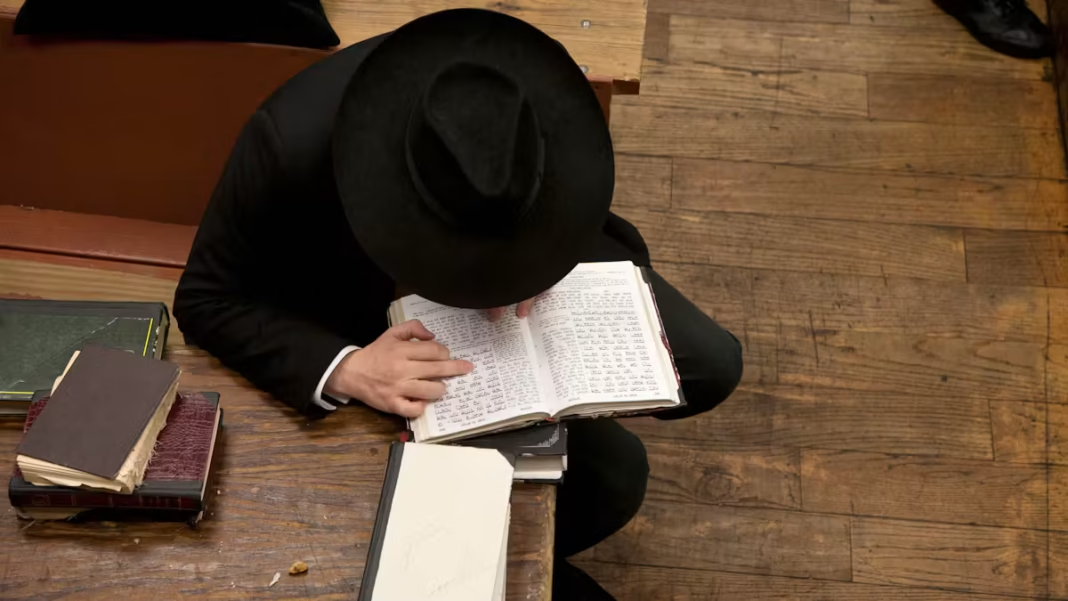
A Maryland county’s gun ban blocks Orthodox synagogue guards from carrying weapons while walking to Sabbath services, according to a new court filing.
Court Challenge Over 100‑Yard Buffer
Silver Spring Jewish Center and Rabbi J. Menashe Shapiro asked the Fourth Circuit on Tuesday to halt Montgomery County’s enforcement of a 100‑yard firearms restriction around places of public assembly, including their synagogue.
The filing, submitted by the New Civil Liberties Alliance and the Becket Fund for Religious Liberty, states that “Each Sabbath that passes without relief inflicts irreparable harm.”
Expedited Bill 23-26, enacted July 27, prohibits anyone from possessing or carrying a firearm within 100 yards of parks, schools, libraries, government buildings, polling places and houses of worship.
Permit holders may drive through those zones, but Orthodox Jews cannot drive on the Sabbath, forcing them to walk the route between Rabbi Shapiro’s home and the synagogue, which passes within 100 yards of four schools, two parks and three additional houses of worship.
The synagogue, one of Maryland’s oldest Orthodox congregations, reports rising threats since the October 7, 2023 Hamas attack on Israel; a Jewish member was assaulted outside the building in October 2024 and an unknown individual attempted entry in June 2026.
An armed volunteer security team, all licensed under Maryland law, provides protection as a religious duty rooted in Talmudic and later sources that command proactive self‑defense.
Senior U.S. District Judge Deborah K. Chasanow previously found the plaintiffs likely to succeed on their challenge to the ban inside the synagogue, issuing a preliminary injunction that allowed handguns only within the sanctuary.
She left the 100‑yard buffer in place, ruling the plaintiffs had not demonstrated the restriction’s unconstitutionality in every application, effectively preventing armed members from approaching the synagogue on foot.
The county’s historical justification falters under the Supreme Court’s Bruen test; it cited an 1837 Maryland wild fowl law restricting guns near a hunting blind only with intent to shoot, and an 1859 Connecticut statute regulating liquor, neither of which involve firearms.
The filing notes the county told the lower court it did not oppose the plaintiffs’ request for relief specifically on the buffer zone, yet the judge denied that relief without addressing the concession.
Other jurisdictions, including Baltimore, Gaithersburg, Takoma Park and the federal school‑zone law, exempt permit holders, while the county’s rule applies uniformly.
Councilmember Natali Fani‑González and other supporters describe the measure as a commonsense step to curb gun violence.

