
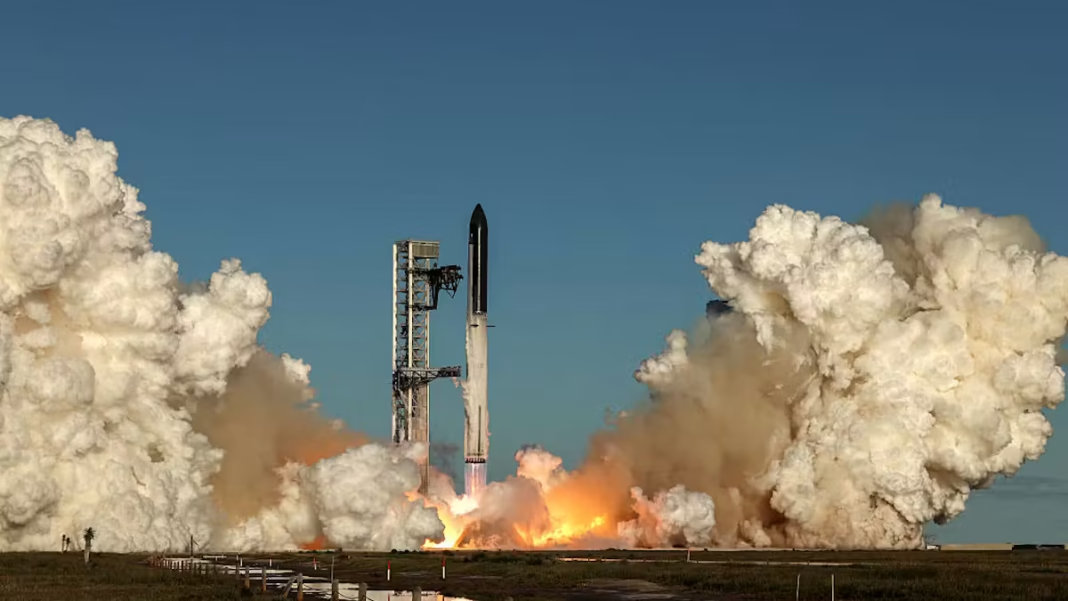
SpaceX’s 15th Starship test flight failed to land its Super Heavy booster, which plunged into the Gulf of Mexico after a low‑fuel abort. The upper Starship vehicle, however, reached 170 miles, deployed Starlink satellites and completed a 22‑hour, 14‑orbit circumnavigation before setting up for its own catch.
Starship Test Flight Highlights
Saturday’s successful catch marks a crucial milestone in SpaceX’s effort to build the first fully reusable rocket. The company aims to treat rockets like airplanes, turning them around quickly for repeated flights.
Most launch vehicles are discarded after a single use, driving up costs. SpaceX wants to change that by making Starship reusable and rapid‑turnaround.
At a September conference, founder Elon Musk said Starship is designed “not just for full reusability but also rapid reusability, like an aircraft.” He made the claim during a public address.
Beyond Mars missions, SpaceX plans to use Starship for Starlink deployments and other high‑value payloads. The rocket’s versatility supports the company’s broader commercial and government objectives.
NASA Administrator Jared Isaacman praised the achievement on X, writing “Congrats to @elonmusk and the @SpaceX team! It was almost magic … Making more believers by the day … one step closer to [the moon].” His message highlighted the progress toward lunar exploration.

