
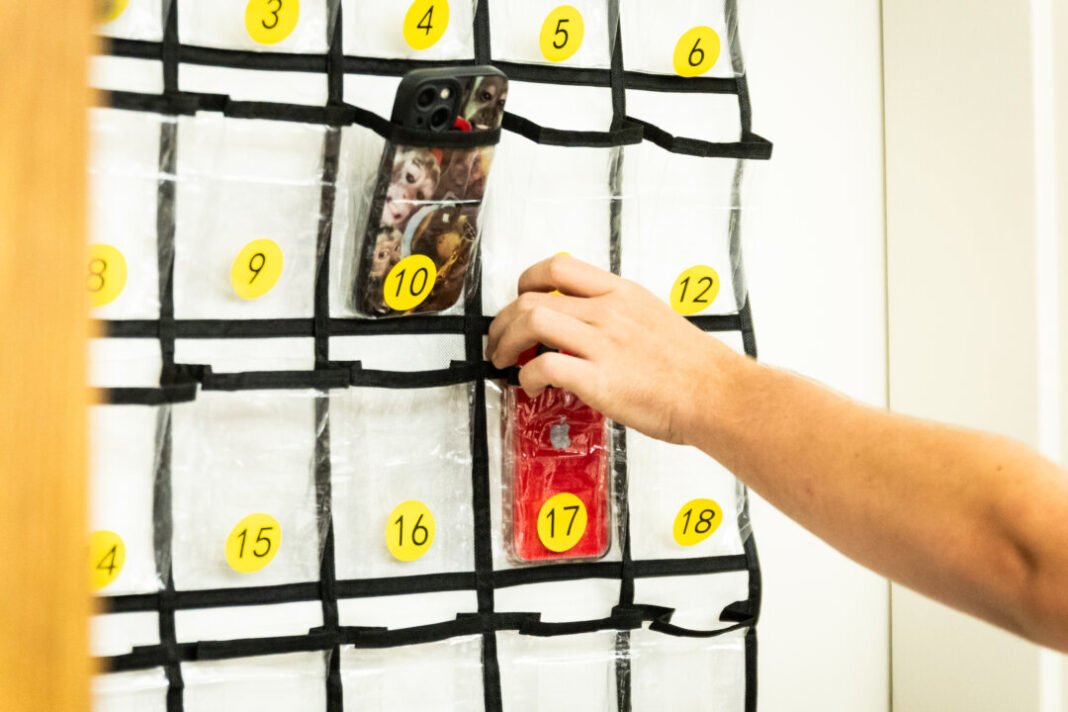
Schools that ban phones are reclaiming up to two weeks of classroom time each year, a new report shows.
The study, led by Harvard University’s Center for Education Policy Research together with Dartmouth College and the NWEA education advising organization, examined math and reading growth for 3.3 million students in grades 3‑10 across 4,600 schools from 2021 through the 2025‑2026 academic year.
“While schools should not expect a large boost immediately, storing phones is a cost‑effective way to add one to two weeks of instruction each year,” said Douglas Staiger, an economics professor at Dartmouth College who co‑authored the study.
Tom Kane, a Harvard professor and study leader, noted that smartphone proliferation around 2013 caused students to lose two to three weeks of learning annually, with eighth graders falling nearly a year behind; “subsequent restrictions seem to plug about half of that leak,” he said in a Nov. 17 statement.
Most public schools nationwide operate under some form of phone restriction, though the absence of a state law does not prevent districts from imposing bans.
The research analyzed National Assessment of Educational Progress scores, supplemental NWEA assessments, and data from 1,369 schools in states with bell‑to‑bell bans, 211 schools in states with instructional period bans, and 1,389 schools in states without bans for the 2025‑2026 year.
Researchers recommended restricting several social media platforms and urged state education departments and districts to track student engagement through extracurricular participation, homework completion, reading time, in‑person socialization, and measures of anxiety and depression.
“We have lacked data linking cell phone use to academic or non‑academic outcomes; social media companies possess the usage data but have not connected it to student results,” Kane said.
A 2025 study of a large Florida district, the first state to enact a phone ban, found modest test score gains and lower unexcused absences after the 2023 legislation.
Initial student resistance led to a double‑digit rise in suspension rates during the first year, followed by a sharp decline in 2024‑2025.
“Educators must minimize short‑term adverse effects until a new status quo without cellphones is established,” the study concluded.

