
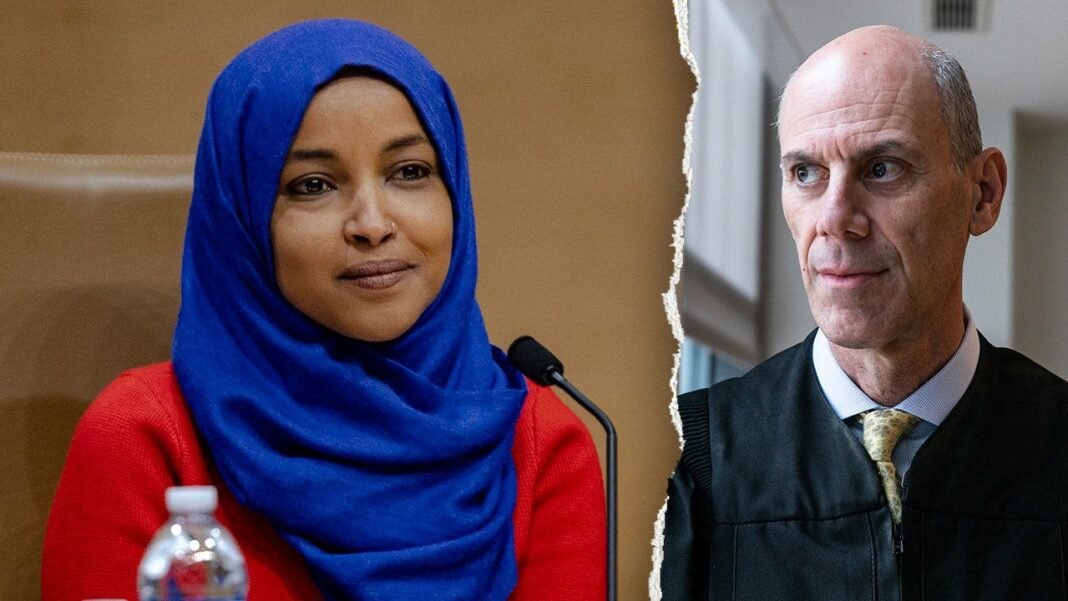
Judge James Boasberg has ordered the release of sealed documents in the investigation of Rep. Ilhan Omar. The move clashes with his 2023 ruling that kept a similar warrant for former President Donald Trump under lock and key.
Contrasting Decisions on Sealed Warrants
The Justice Department urged the court not to unseal the warrant materials in the Omar case. It cited an ongoing investigation and said the search was not yet complete.
Boasberg rejected that argument. He said the public interest outweighs secrecy and ordered the redacted filings to be posted online Monday night.
Only the government’s warrant affidavit remains sealed. That protects ongoing investigative details.
Background on the Trump Warrant Case
In a separate 2023 dispute, Boasberg kept a warrant related to Special Counsel Jack Smith’s probe of Trump sealed. He argued that premature disclosure could jeopardize the investigation.
Trump had already been indicted in that case, whereas Omar has not faced charges.
The DOJ pointed to Boasberg’s prior reasoning as a precedent for maintaining secrecy in the Omar matter. It argued that the earlier decision set a clear precedent.
Omar’s Legal Battle and Investigative Scope
Federal agents raided Omar’s Washington, D.C., home on Oct. 12, 2026, seizing items as part of a probe into alleged fraud on her citizenship paperwork. The operation was conducted by the FBI.
Prosecutors say evidence dates back to 1980 and allege crimes spanning decades before she entered Congress. They allege the misconduct spans more than four decades.
Omar’s attorneys argue the search did not violate the Speech or Debate Clause, while a magistrate judge required safeguards for potentially privileged material. They also claim the investigation is politically motivated.
DOJ Response and Ongoing Scrutiny
The DOJ confirmed that the claim Boasberg contradicted himself is accurate, a point it has raised in its filings. It said the sealed affidavit remains necessary to protect the probe.
Legal analysts note Boasberg’s history of signing sealing orders in other cases, including the Arctic Frost probe involving subpoenas for Republican lawmakers’ phone records. They warn that such secrecy could impede transparency.
The District Court for the District of Columbia and the U.S. Attorney’s Office for D.C. declined to comment. A spokesperson declined to provide further comment.
Peter D’Abrosca, a politics reporter for Fox News Digital, covers the story. His reporting follows high‑profile legal battles involving congressional members.

