
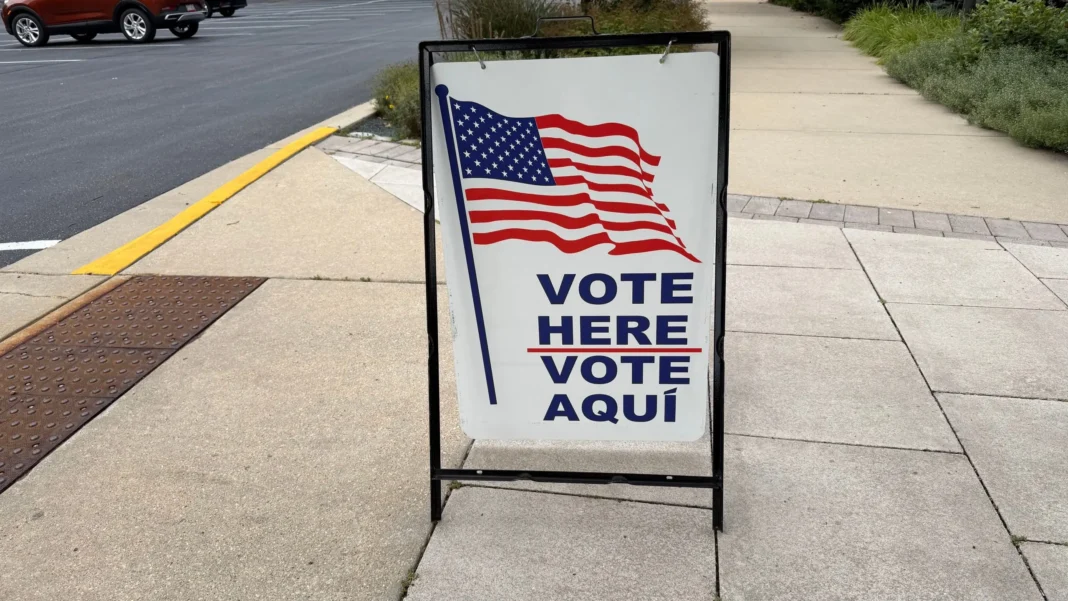
While Democrats’ midterm sweep dominated Election Night, voters in several states delivered consequential — and sometimes crosscutting — verdicts on voter ID, abortion access, taxes and English‑language laws. These down‑ballot outcomes reveal the policy priorities voters chose to elevate despite the GOP’s crushing losses.
New voter ID voting requirements
More than a dozen states placed voter‑ID measures on the ballot, and a majority passed them. Nevada approved Question 7, establishing its first constitutional requirement for in‑person ID and demanding the last four digits of a driver’s license or Social Security number on mailed ballots. North Carolina voters expanded existing photo‑ID rules to all voting methods after a 59.6% to 40.3% constitutional amendment win.
Ohio’s Issue 3 codified in‑person ID requirements in the state constitution with a 65.3% to 34.6% margin, reinforcing a law already on the books. These results show that even as federal action stalls, state voters continue to prioritize stricter voting standards.
English becomes Idaho’s official language
Idaho voters passed HJR6, a 63.1% to 36.8% measure that makes English the state’s official language in public proceedings. The amendment follows a 2007 statute that already designated English as official, but the constitutional change locks the policy in place. State Rep. Dale Hawkins, a key sponsor, said the move aligns with the Trump administration’s executive order and stresses assimilation through a common language.
Idaho voters reject abortion rights amendment
Idaho’s Proposition 1, which would have guaranteed a right to abortion up to fetal viability, was defeated 44.0% to 55.9%. The failure preserves the state’s current limits, allowing abortions only to save a woman’s life or in cases of rape or incest. Pro‑life advocate Marjorie Dannenfelser hailed the outcome as a victory for protecting life and warned that the battle will continue across the country.
California billionaire tax defeated
California voters rejected Proposition 40, a 5% levy on billionaire assets championed by the Democratic Socialists of America, by a 47.5% to 52.4% margin. The proposal would have taxed business, securities, art, collectibles and intellectual property, sparing pensions, real estate and retirement accounts, and applied retroactively to residents on Jan. 1, 2026. Governor Gavin Newsom opposed the measure, arguing it would hurt California’s competitiveness.
California voter ID measure defeated
Proposition 39, a constitutional amendment that would have required photo ID at the polls and verification of voter registration lists, fell 39.4% to 60.5%. The plan also demanded the last four digits of a government ID on absentee ballots. Newsom labeled the initiative voter suppression, saying it echoed attempts by Trump and MAGA allies to rig elections.
Leo Briceno covers politics for Fox News Digital. He previously reported for World Magazine.

