
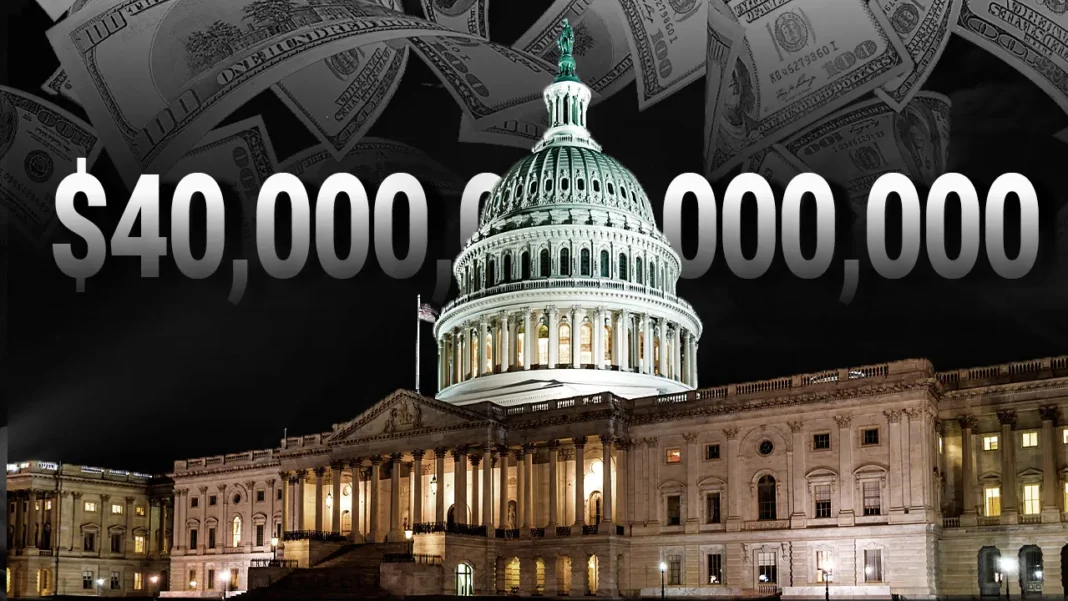
America’s national debt has surged past $40 trillion for the first time, a milestone that puts the United States on a dangerous fiscal trajectory.
Debt-to-GDP Ratio Rises
The total public debt now exceeds 124% of GDP, a level only matched by a handful of nations such as Sudan, Venezuela, Japan, Greece and Italy.
Debt held by the public tops $32 trillion, nearing 100% of GDP, and the Congressional Budget Office projects it will climb to 120% by 2036.
Economic Consequences
Higher debt crowds out private capital, drives up interest rates, and slows economic growth, according to a JPMorgan Chase executive warning about regulatory proposals that could further tighten credit for millions of small businesses.
For every additional dollar of deficit, private investment falls by roughly 33 cents, the CBO estimates, and an extra $1 trillion in debt reduces long‑run capital stock by 0.7‑0.8%, curbing productivity and wages.
Political Debate and Misguided Theories
Some lawmakers cite Modern Monetary Theory, arguing that a sovereign dollar issuer can spend without limit, a view promoted by Rep. Alexandria Ocasio‑Cortez and Sen. Bernie Sanders’s chief economist, despite ignoring crowd‑out effects and the need for real economic value.
Treasury net interest costs already exceed $1 trillion annually and are projected to surpass $2 trillion within a decade, consuming a growing share of federal revenues.
Path Forward
Experts agree the only sustainable solution is to eliminate deficits, run a surplus, and begin repaying the debt, while restraining entitlement spending and boosting private‑sector growth through targeted reforms.
Both parties contributed to the $40 trillion total, making bipartisan action essential; inaction guarantees higher interest payments, reduced investment, and a heavier tax or inflation burden for future generations.
Michael Bicksel, former Heritage Foundation Young Leaders Program member, and Nicole Huyer, senior research associate at the Heritage Foundation’s Roe Institute, underscore the urgency of decisive fiscal policy.

