
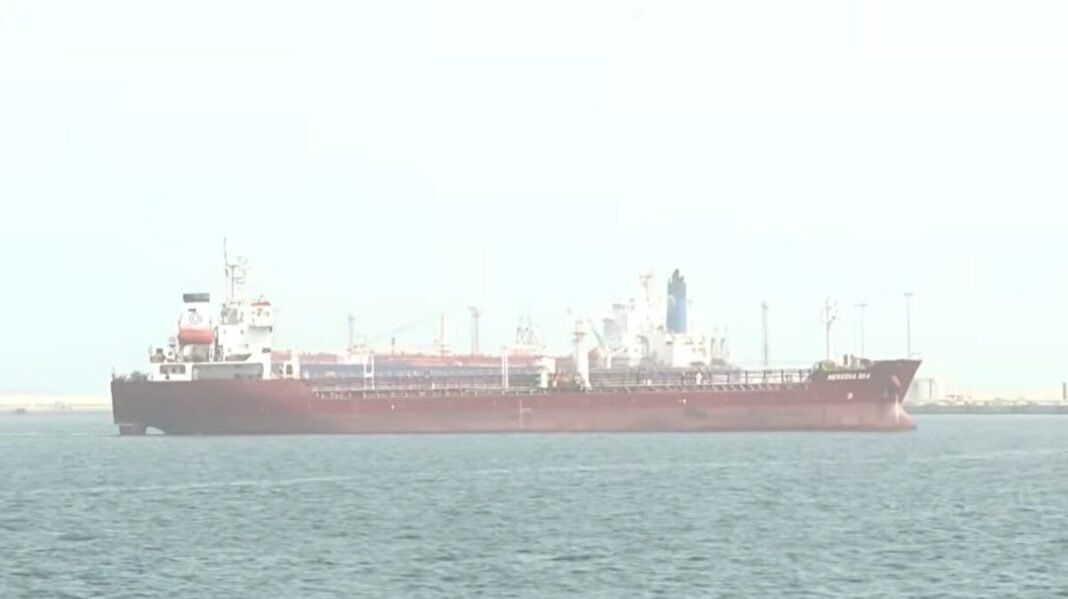
The Justice Department confirmed it is reviving maritime prize courts to seize tankers carrying Iran’s sanctioned oil that are blocked in the Strait of Hormuz, a move not seen since the Spanish‑American War. U.S. Attorney Aaron Reitz said the ancient law, already on the books, is being used for the first time in over 80 years.
Prize courts are federal district courts empowered by Congress to decide whether a captured vessel or cargo can be lawfully condemned, transferring ownership to the United States and allowing the proceeds to be kept. The Constitution grants Congress authority over captures, and the Supreme Court affirmed that authority in 1794 (Glass v. The Sloop Betsey).
Iran’s Case
The blockade began with strikes on Feb. 28 and has included an indefinite naval embargo that has crippled Iran’s fuel reserves, forcing long lines in Tehran and Mashhad. Prize law lets the government move oil to auction faster than the civil forfeiture process, which took months to sell 1.116 million barrels in a 2020 case.
Venezuelan Oil
On Dec. 10, 2025, federal agents boarded the tanker Skipper off Venezuela, seizing 1.8 million barrels of crude; the DOJ filed its forfeiture complaint more than two months later, delaying any sale. Under prize law, title could have transferred to auction within weeks, not months.
The same doctrine now extends to the oilfield itself: President Trump announced a 100‑year concession granting a private venture rights to develop 17 Venezuelan fields holding 65 billion barrels, with the United States taking a 55 percent share of output, following the capture of Nicolas Maduro and the installation of his former vice president, Delcy Rodriguez.
DOJ’s Revival of Prize Courts
Legal challenges are expected as soon as a court validates the first capture. Claimants can object, but their arguments are narrower than in civil forfeiture, according to Bloomberg Law. The central dispute will be whether an actual armed conflict exists to trigger prize jurisdiction, since Congress has not formally declared war on Iran.
Shipowners and their protection‑and‑indemnity insurers will argue the vessels were neutral, a point litigated since the age of sail, while victims of Iranian terrorism may file competing claims to the seized assets, adding another layer to the case. The strategy is not frivolous; it is a high‑stakes asset fight that will play out in courtrooms for years.
The founders included prize law in the Constitution because they had just won a war and understood that lawfully captured enemy ships and cargo belong to the victor. After decades of hesitation over optics, the United States is now putting that principle back into practice, even as it negotiates a century‑long oil concession.

