
Chinese companies now control critical segments of America’s food production, giving Beijing leverage over U.S. agriculture.
A Deal Changed the Equation
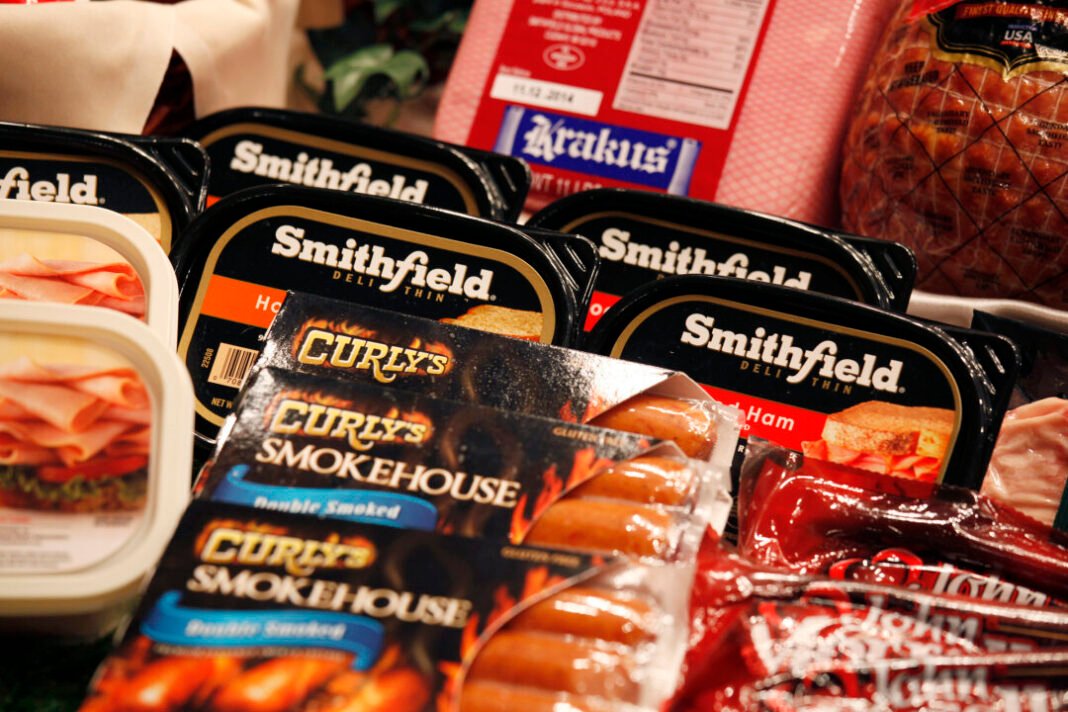
In 2013, Shuanghui International, now part of Hong Kong‑based WH Group, bought Smithfield Foods for $7.1 billion, making it the largest U.S. pork producer.
WH Group holds about 87 % of Smithfield’s shares as of March 2026, giving China access to hog farms, processing plants, distribution networks and production expertise.
It Goes Beyond Pork
In 2017, state‑owned China National Chemical Corp. acquired Swiss agribusiness Syngenta, a global leader in seeds and crop‑protection products used by U.S. farmers.
The deal sparked regulatory review, but food‑security concerns were not the primary focus of the assessment.
The 2023 Chinese Food Security Law explicitly seeks absolute self‑sufficiency in staple grains and greater domestic production of food.
Inputs May Matter More
China dominates global supplies of agricultural chemicals and certain feed additives, creating strategic dependencies for U.S. growers.
The American Foreign Policy Council warned that these dependencies can give Beijing leverage over U.S. agriculture, even when farms are fully American‑owned.
China’s Footprint
Chinese investors owned roughly 247,659 acres of U.S. agricultural land by the end of 2024, representing less than 1 % of all foreign holdings, according to USDA data.
Ownership is concentrated in Texas, North Carolina and Missouri, and five companies account for about 92 % of the total, raising concerns when farms sit near military or transportation infrastructure.
Paying Attention
Congress is expanding CFIUS authority to scrutinize agricultural land, biotechnology, food processing and related assets.
Proposed legislation would bar purchases by entities linked to China, Russia, Iran and North Korea, reflecting a shift from pure economic considerations to national‑security reviews.
What Is the Trump Administration Doing About It?
The 2025 America First Investment Policy directs CFIUS and other agencies to block Chinese investment in strategic sectors, including agriculture, food supplies, farmland and energy.
In December 2025, President Trump ordered the Justice Department and FTC to form Food Supply Chain Security Task Forces to probe anti‑competitive behavior and assess national‑security risks from foreign control of food‑related industries.
These actions aim to build resilience by promoting domestic production of critical feed additives and chemicals, tightening acquisition reviews and tracking beneficial ownership.
Views expressed are those of the author and do not necessarily reflect the opinions of The Epoch Times.

