
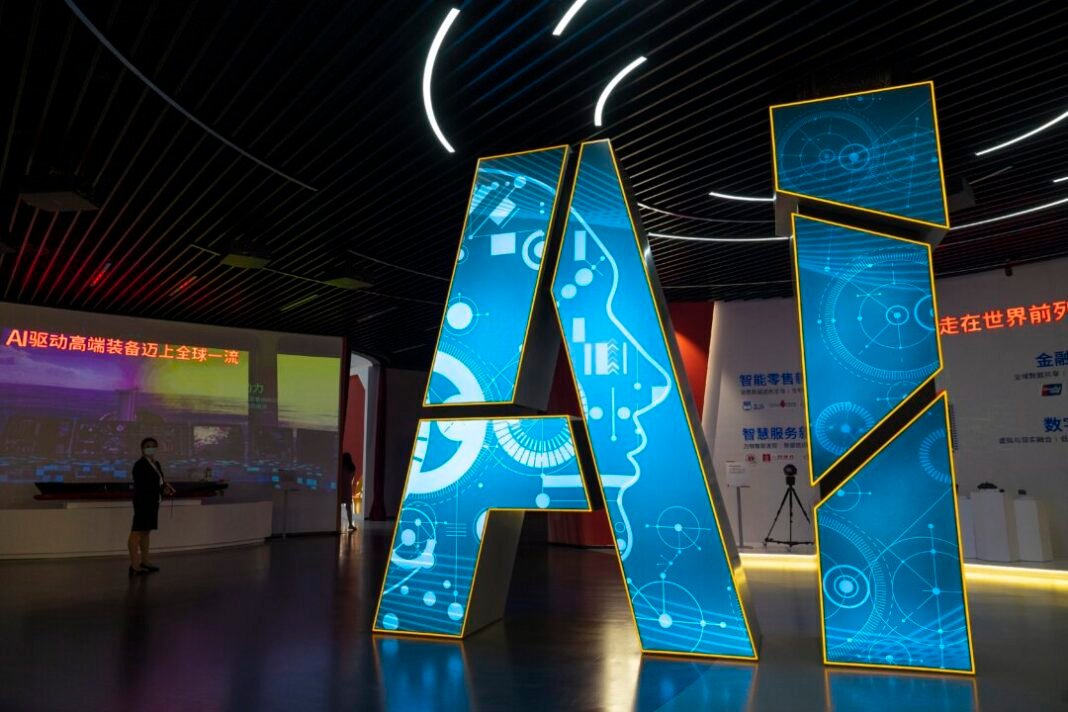
China’s AI push threatens to deepen its water shortage. The nation must support a fifth of the world’s population with just 6% of its freshwater.
China Is Betting Big on AI Infrastructure
Over the next five years Beijing will spend roughly 2 trillion yuan ($295 billion) to expand its nationwide AI data‑center network, creating interconnected hubs that rely on domestic suppliers.
The plan emphasizes interconnected computing hubs and heavy reliance on domestic technology suppliers.
China’s Data Centers Already Have a Water Problem
A 2025 Applied Energy study found data centers consumed 15.7 billion cubic meters of water in 2022, about 2.7 % of China’s total water use.
Researchers note that 72 % of the country’s computing capacity sits in regions suffering severe water scarcity.
Moving Data West Doesn’t Move the Water
Beijing’s “Eastern Data and Western Computing” plan shifts workloads to the arid west, where solar and wind power are abundant but water is scarce.
The strategy aims to use cheaper renewable energy but ignores local water constraints.
China Is Trying to Make AI Greener
The government aims for 80 % of data‑center electricity from green sources by 2030, up from 11 % in 2023, but variable AI loads complicate renewable integration.
Balancing intermittent computing demands with steady renewable supply remains a major hurdle.
The AI Boom Could Outrun the Efficiency Gains
Rystad projects a 19 % annual rise in data‑center electricity consumption through 2030, meaning total water use may keep climbing even as per‑unit efficiency improves.
If demand outpaces efficiency, the sector could become a net water consumer despite better technology.
What Happens If Water Becomes the Bottleneck?
Scarcity around key AI hubs could force restrictions on new data‑center locations, raise infrastructure costs, and shift computing to water‑rich regions.
Such constraints could slow AI deployment and increase overall system expenses.
Increased competition for water among agriculture, cities, industry and tech firms could strain China’s already water‑intensive economy, making freshwater a critical constraint on AI expansion through the 2030s.
Policymakers must balance AI growth with food security and urban water needs to avoid a looming crisis.
Views expressed in this article are opinions of the author and do not necessarily reflect the views of The Epoch Times.

