
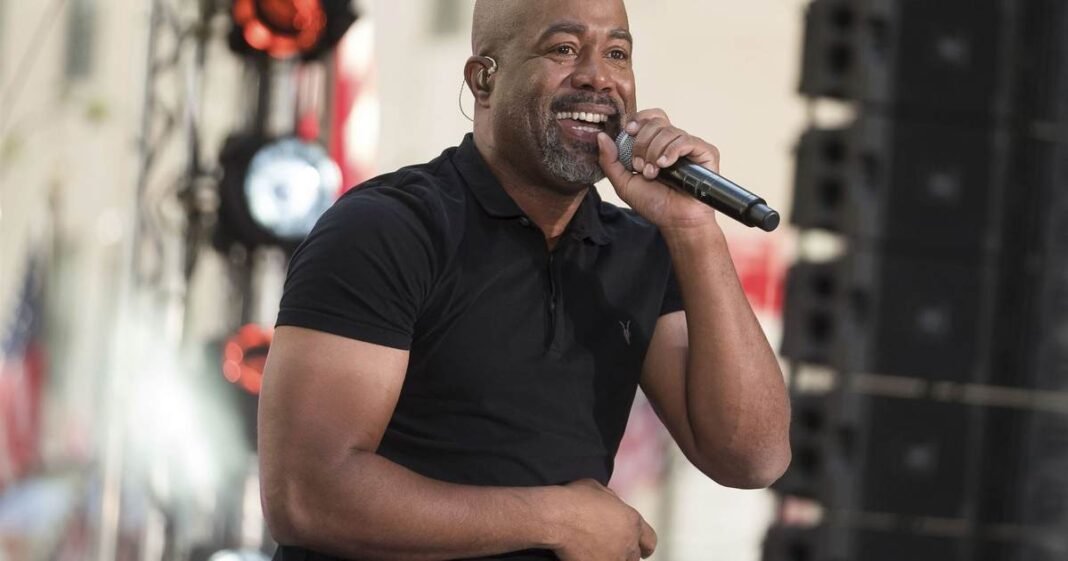
Darius Rucker blasted the entertainment industry and the black community for overlooking his contributions and questioning his identity, delivering the remarks during a recent episode of The BobbyCast.
Rucker’s Critique of The Nineties and Industry Oversight
In an interview with Bobby Bones, Rucker accused the CNN docuseries The Nineties—produced by Tom Hanks—of deliberately omitting Hootie & the Blowfish, a band that sold 25 million albums worldwide and earned two Grammys.
Rucker, who has amassed four number‑one country albums and ten chart‑topping singles, said he confronted Hanks directly, prompting an apology but no change.
He also noted that the series failed to recognize the band’s cultural impact, despite its 22‑times‑platinum certification for Cracked Rear View, one of the best‑selling U.S. albums in history.
Race and Industry Bias
Rucker revealed that criticism has come not only from white fans but also from black peers who question his genre choices.
“I’m not talking about just white folks being racist. I’m talking about black folks going, ‘What the f*** are you doing, man? Really?’” he told Bones, adding that he has endured a lifetime of remarks about his race.
He described a recent social‑media encounter in which a woman reminded him that he is black, stating, “I’ve been doing this for 60 years… I know I’m black,” and expressed frustration that success is met with suspicion rather than celebration.
Rucker recalled a conversation with the late Charley Pride, who pointed out that despite winning Entertainer of the Year at the 1971 CMA Awards and hosting the CMAs, Rucker had never appeared on the covers of Ebony or Jet.
“We did what people said we couldn’t do. We can’t do it. That’s impossible,” Rucker said, emphasizing the barrier‑breaking nature of his achievements.
He added that while racism from white individuals is manageable, prejudice from within the black community “crushes your soul.”
Fan Plea and Musical Requests
Rucker’s public appeal extended to a request for a cover of R.E.M.’s “You Are the Everything,” a song he has previously performed.
He expressed personal admiration for the track, noting his long‑time fandom and a recent attempt to secure a performance at the February 9 Hoot Owl Hoot show in Charleston.
Rucker also praised his own rendition of “Let Her Cry,” saying he loves singing it and has no intention of stopping.
Overall, the interview highlights Rucker’s perseverance, his grievances over industry recognition, and ongoing dialogue about race in American music.

