
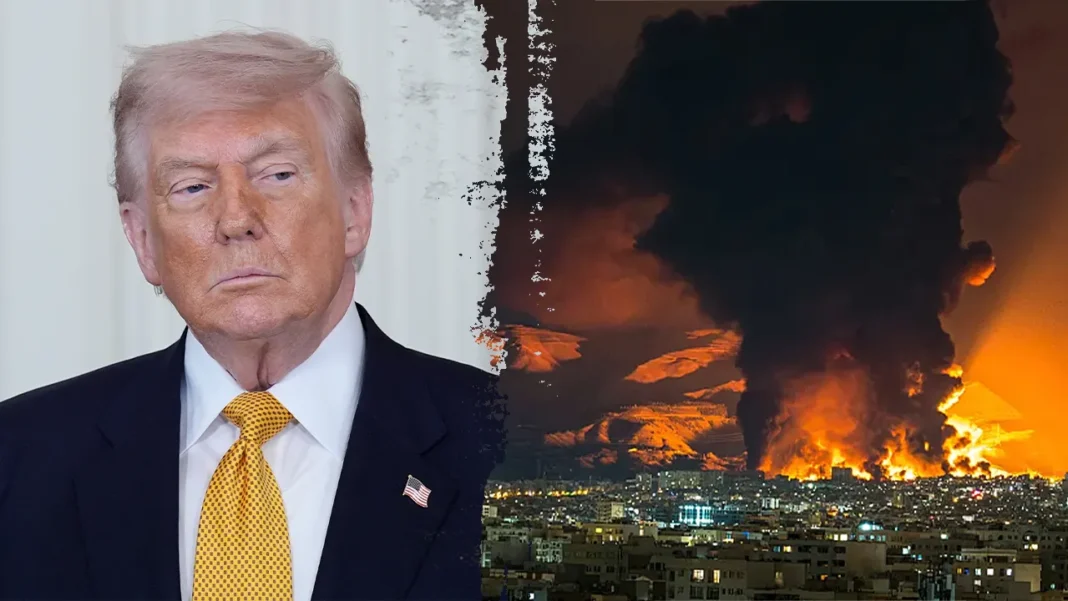
Strategic Risks of a Half‑War
The United States has crossed the Rubicon with Iran, and there is no turning back. Military strikes have crippled Tehran’s infrastructure, shattered its economy and proved Washington’s willingness to use overwhelming force.
Since 1979, the Islamic Republic has repeatedly threatened the United States and Israel through hostage taking, bombings, assassination plots and proxy warfare. These actions span successive administrations and demonstrate a long‑standing hostile agenda.
The United States now holds a decisive military advantage, but declaring victory too soon risks allowing Iran to rebuild the very capabilities that sparked the conflict. The cost of that misstep would be a resurgence of Iranian power and a longer, more costly conflict later.
Three‑Pronged Strategy
Success requires simultaneous diplomacy, sustained economic pressure and credible, periodic kinetic action. Diplomacy must offer a verifiable path to reduced isolation in exchange for strict nuclear limits, while sanctions must choke the regime’s ability to fund its military and proxy forces. Military strikes must target legitimate threats with clear objectives, legal justification and an awareness of escalation risks.
Congress worries about gasoline and fertilizer prices, but a nuclear‑armed Iran would impose far greater economic costs through disrupted oil flows and global shipping. Lower fuel prices alone would not offset the strategic danger of a revitalized Iran.
Victory Defined
Victory means Iran cannot acquire nuclear weapons, cannot rapidly rebuild threatening missile or drone capabilities, cannot finance its proxies at previous levels and cannot hold international commerce hostage. Even if the regime remains hostile, its capacity to act on that hostility must be severely constrained. Any premature declaration of victory would squander the military advantage earned on the battlefield.
The United States must maintain a strategy that contains the threat while creating space for a verifiable diplomatic settlement; a pause in shooting is not an endgame.

