
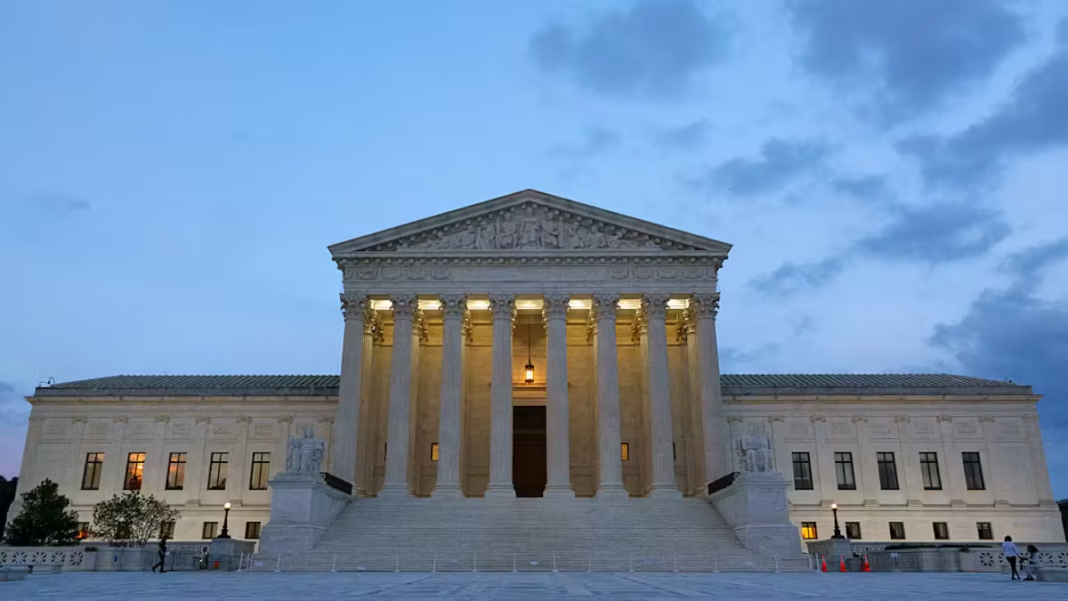
The Supreme Court opens its new term Monday with a docket packed with Trump immigration fights, AR‑15 bans, religious liberty clashes, election disputes and climate lawsuits. Major cases could reshape voting rules, gun rights, climate liability and the balance of power in Washington.
Political Pressure on the Bench
Trump has publicly criticized his own appointees after rulings against his administration, signaling growing tension between the White House and the Court. Democrats have floated structural changes, such as expanding the bench, while speculation about a vacancy intensifies as the November midterms could shift Senate control.
Election Rules and the Midterms
The Court will hear Arizona’s proof‑of‑citizenship requirement in Republican National Committee v. Mi Familia Vota on December 8, questioning whether state voter‑registration forms can demand documentary proof of citizenship and whether states may purge noncitizens from rolls within 90 days of a federal election; emergency ballot‑access requests could arise before the midterms.
Trump’s Immigration Policies on Trial
Two docket cases could shape the administration’s immigration agenda. The first, argued in December, examines deporting migrants to countries with no personal connection, a practice the Court has already allowed to continue. The second, slated for early next year, challenges mandatory detention without bond hearings, a policy lower courts have repeatedly rejected.
AR‑15 Bans Under the Second Amendment
The justices will review challenges to AR‑15‑style rifle bans in Viramontes v. Cook County and Grant v. Higgins. Cook County, Illinois, and Connecticut defend the restrictions under the historical tradition framework set by the 2022 Bruen decision, with arguments set for December.
Climate Litigation Reaches the High Court
Boulder, Colorado, seeks to hold ExxonMobil and Suncor liable for climate damages in Suncor Energy v. County Commissioners of Boulder County. The energy firms argue federal law bars state courts from hearing greenhouse‑gas emission claims, and Justice Samuel Alito is recused, leaving eight justices to decide.
Emergency Docket Gains Prominence
The Court’s emergency docket has become a rapid‑response tool for executive actions, immigration rulings, election disputes and other urgent matters. Vladeck told NPR that emergency filings have doubled under the Trump administration, with twice as many full‑court rulings on emergency applications as on the merits docket.
Religious Liberty versus Anti‑Discrimination
St. Mary Catholic Parish in Colorado will argue whether its participation in the state’s universal preschool program violates nondiscrimination rules by excluding children with same‑sex or transgender parents; the case is set for November. A separate Texas dispute over a Ten Commandments classroom display could revisit longstanding precedent on religious symbols in public schools.
Justice Tenure and Potential Vacancies
Justice Alito, 76, will stay through the current term after considering early retirement. Justice Thomas, 78, is the oldest justice, and both face speculation about possible vacancies that could reshape the Court.
Legislative Push for Court Reform
Democratic lawmakers propose term limits, an expanded bench and a binding ethics code for justices. Success depends on congressional composition and Senate rules, while critics from both parties attack the Court’s decisions, with Trump repeatedly denouncing rulings that oppose his administration.
Undecided Cases May Alter the Narrative
The docket remains unfinished, with pending petitions on Trump policies, the Texas Ten Commandments law, prediction‑market regulation and abortion‑pill rules. The cases that ultimately define the term are still unknown, making the coming months highly uncertain.

