
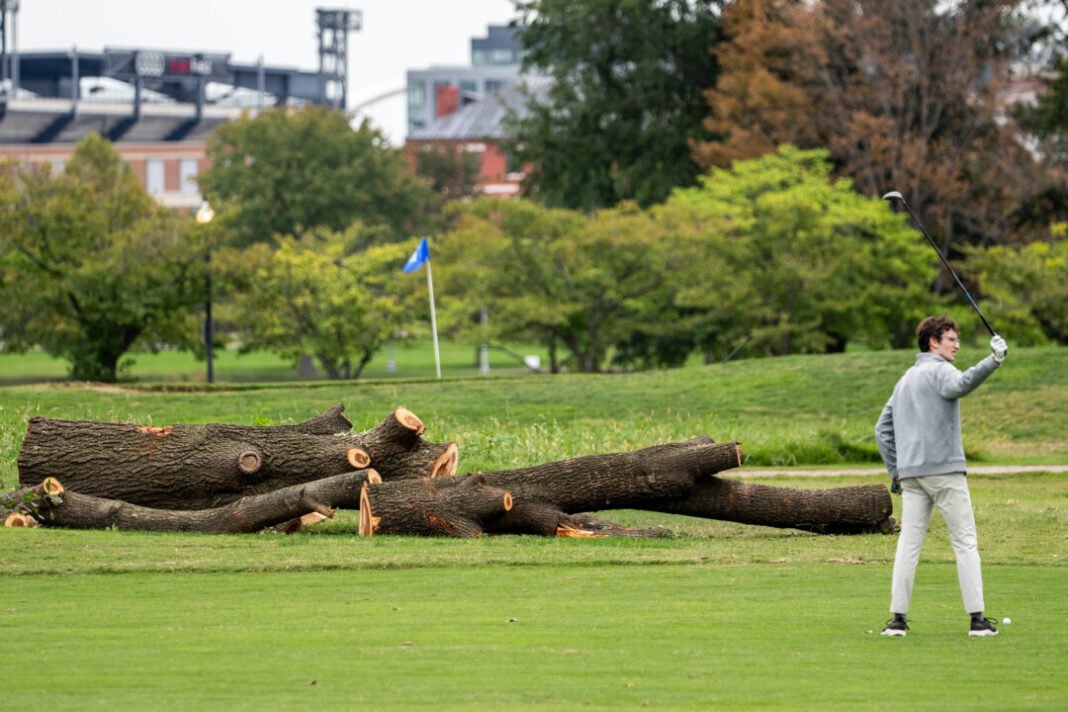
A federal judge has extended the block on President Donald Trump’s plan to close Washington’s East Potomac Golf Course until Dec. 12, dealing a fresh blow to the administration’s renovation push.
Federal Judge Extends Block on Trump Golf Course Closure
Judge Ana Reyes issued the extension on Nov. 23, moving the temporary restraining order from Nov. 28 to Dec. 12, citing the Thanksgiving holiday’s impact on litigation timing. The extension keeps the course open while the case proceeds.
Reyes reiterated that the original reasoning for the Nov. 14 order still applied and noted that the administration had “likely violated” the National Environmental Policy Act and the Administrative Procedure Act by failing to conduct required notice‑and‑comment rulemaking. She said the administration’s rapid closure plan bypassed standard environmental review procedures.
White House spokesperson Taylor Rogers defended the proposal in an emailed statement, saying the administration intends to revitalize the East Potomac Golf Course, which has fallen into disrepair, and called the judge’s decision an “unlawful intrusion.” Rogers emphasized the project’s public benefit and promised to pursue an appeal.
The DC Preservation League and golfers Alex Dickson and Dave Roberts argued that the closure breached the National Environmental Policy Act, which obligates agencies to assess environmental impacts before final action. They filed suit to force compliance with federal environmental law.
The Interior Department claimed the golf course would have no operator after Nov. 15, prompting the National Links Trust nonprofit to step in temporarily, and pointed to safety concerns raised by a deteriorating seawall. Officials said the seawall posed a risk to golfers and nearby visitors.
Judge Reyes rejected the safety justification, noting the National Park Service had identified the seawall as a hazard since 2019 and had previously fenced off dangerous sections without shutting down the entire course. She said the administration had not shown why a full closure was necessary.
She also questioned the administration’s claim that a daytime marathon justified keeping the course open while children and others used the area at night, saying the explanation did not justify a permanent, all‑hour closure. Reyes demanded a clearer rationale for the indefinite shutdown.
Reyes had previously issued a preliminary injunction on Oct. 26 that halted tree removal, alleging the government was segmenting its environmental review to evade full NEPA compliance. The order prevented the defendants from cutting down trees at the site.
Hundreds of trees were cut down and dirt from the White House’s East Wing was dumped on the course, actions the plaintiffs labeled as routine maintenance and landscaping, respectively. The administration argued the work supported planned renovations.
A hearing to decide whether a long‑term injunction will block the golf course closure is set for Dec. 8, as the administration prepares to appeal the ruling. Both sides will present further evidence on the environmental and safety issues.

