
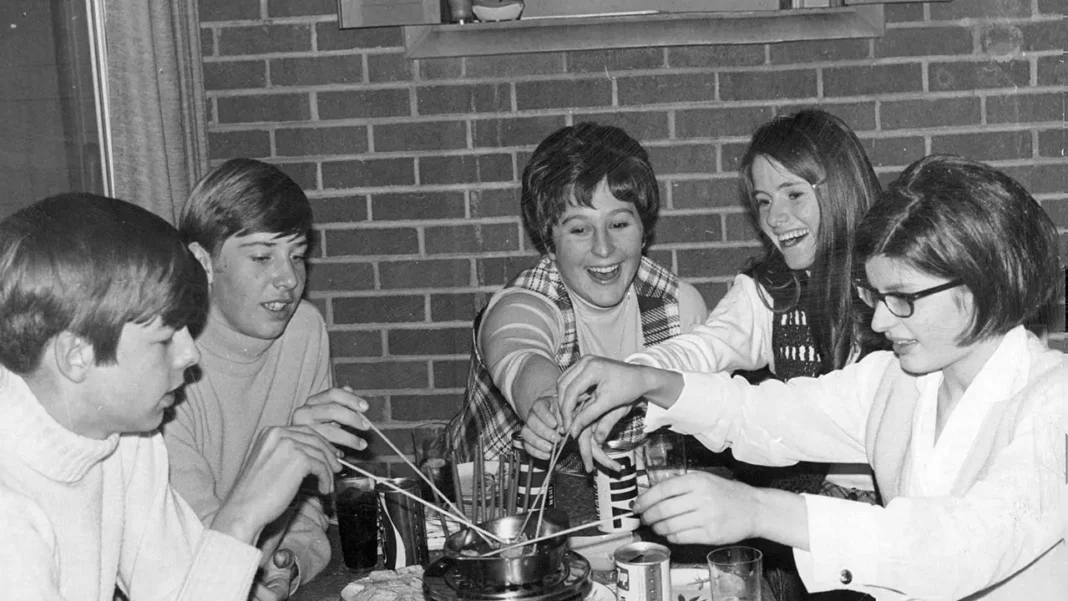
The 1960s reshaped American dining, blending bold international dishes with the convenience foods that dominated the 1950s.
Fondue
The Swiss tradition of fondue surged in popularity after the 1964 New York World’s Fair, where the Swiss Pavilion served cheese fondue to millions.
The communal pot of melted cheese, wine and seasonings quickly became a fashionable centerpiece of mid‑century entertaining.
Casseroles
Convenience cooking drove the rise of casseroles that combined canned soups, frozen vegetables and processed ingredients.
These dishes offered quick, affordable meals that fit the busy lifestyles of 1960s households.
Campbell’s test‑kitchen employee Dorcas Reilly created the green bean casserole in 1955, originally called “Green Bean Bake,” and the recipe still lists just six items.
The simplicity made it a staple on family dinner tables across the country.
Tuna, noodle and mushroom casserole appeared in the 1951 edition of “The Joy of Cooking,” cementing the dish’s place in household menus.
Its inclusion highlighted the era’s preference for easy, one‑pot meals.
Chicken Kiev
While its exact origin is debated, Chicken Kiev links French technique with Eastern European roots, according to Tasting Table.
The dish features a chicken breast stuffed with cold garlic‑herb butter, then breaded and fried.
It remained a popular mid‑century entrée, often served with rice or potatoes.
Frozen versions are still sold in grocery stores today.
French Onion Dip
Lipton’s introduced its dehydrated onion soup in the early 1950s, according to the company’s archives.
Home cooks mixed it with sour cream, creating the party staple known as French onion dip.
Modern versions swap the original two‑ingredient recipe for Greek yogurt, whipped cottage cheese or cream cheese, but the flavor profile stays familiar.
The evolution kept the dip relevant through decades of changing tastes.
From fondue parties to quick casseroles, mid‑century cuisine balanced global flavors with the ease of processed foods, a legacy that still influences today’s grocery aisles.

