
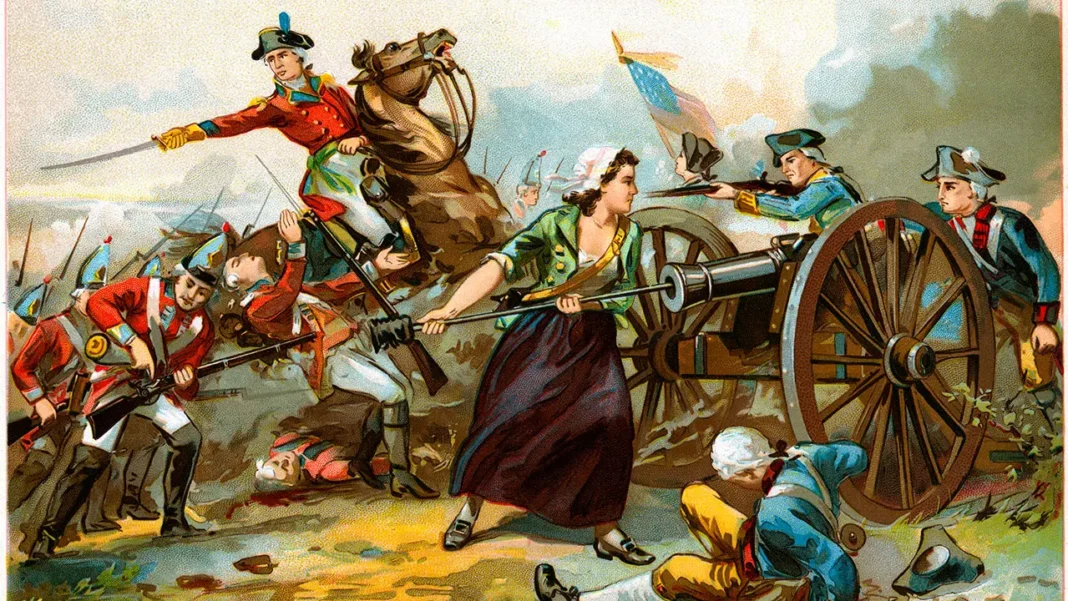
Margaret Corbin became America’s first female combat veteran on November 16, 1776, when she seized a cannon after her husband was killed at Fort Washington as British forces assaulted the clifftop stronghold with 8,000 troops.
British troops captured more than 2,800 American soldiers during the fall of Fort Washington, a devastating loss that also inflicted heavy battle casualties; contemporary accounts say General George Washington watched the chaos through a spyglass and cried like a child.
Margaret Corbin: The Revolutionary War’s First Female Combat Veteran
On November 16, 1776, Margaret Corbin stood at a cannon on the clifftop of Fort Washington as British General William Howe unleashed 8,000 troops from four sides. When a bullet killed her husband, she seized the gun and continued firing, earning a place in history as one of the earliest women to fight on the front lines.
British forces captured more than 2,800 American soldiers during the fall of Fort Washington, a devastating blow that also claimed countless lives. Contemporary accounts describe General George Washington watching the chaos through a spyglass and reportedly crying like a child, underscoring the battle’s emotional toll.
New Book Highlights Revolutionary Snipers and Forgotten Heroines
Historian Patrick K. O’Donnell, author of the bestselling “Revolutionary Snipers: Washington’s Frontier Commandos Whose Marksmanship Forged a New Way of War and Helped Win the Revolution,” frames Corbin’s actions within a broader narrative of elite riflemen and the often‑overlooked women who supported the Continental Army.
“The story of these riflemen and the courage of women like Corbin reshapes our understanding of the Revolution,” O’Donnell told reporters, noting that his trilogy examines the elite units that preceded modern special operations.
Corbin, a fiery redhead known for her profanity and tenacity, survived severe wounds that left her left arm disabled. Congress later recognized her as a combat veteran, and West Point reinterred presumed remains with full military honors in 1926, though her true burial site remains unknown.
Women of the Revolution: From Camp Followers to Battlefield Heroes
Margaret Corbin’s experience reflected the complex role of “Mollies,” the camp followers who cooked, nursed, and sometimes spied for the army. While many officers viewed them as distractions, Washington’s orders to provision extra women prevented desertions among veteran soldiers.
Molly Pitcher, famed as “The Heroine of Monmouth,” tended a cannon at the 1778 Battle of Monmouth. When a musket ball tore through her chest, arm and jaw, she earned the nickname “Captain Molly,” and her sacrifice helped secure an American victory at a high cost to the Hessian forces.
After the battle, British surgeons stabilized the gravely wounded widow, and she later worked at West Point’s Corps of Invalids, smoking a pipe and wearing an artillery coat, embodying the grit of frontier America.

