
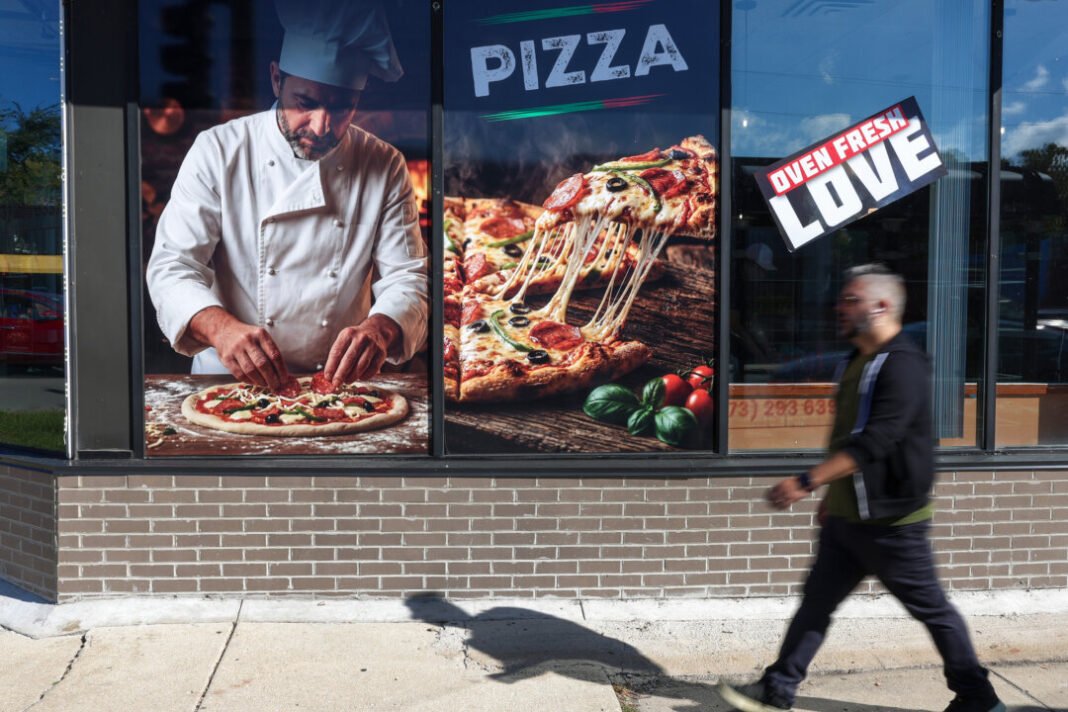
Chicago’s streets are now littered with AI‑generated food images that bear little resemblance to the meals they promise.
AI Slop Invades Food Marketing
Restaurants and cafés across Chicago and its suburbs are plastering menu boards, window posters and social‑media graphics with pictures created by text‑to‑image AI tools.
These graphics often show burgers with impossible bun patterns, burritos that trigger trypophobia, and shrimp that look unnaturally perfect, drawing complaints from patrons and industry insiders.
Consumer Backlash
Jay Goldberg, operations manager at Chicago Culinary Kitchen in Palatine, calls the practice “offensive” and says it erodes trust when menus promise food that never materializes.
“If you bait and switch customers with a picture that doesn’t match what they receive, you lose credibility,” Goldberg told the Chicago Tribune.
A photo from Sept. 23, 2026 shows Goldberg ducking under a hand‑written menu board at the restaurant.
Leonard Pierce, a local crossing guard, avoids any eatery that relies on cartoonish AI posters, preferring establishments that display real photos or no images at all.
At Chi‑Town Food and Deli, an elderly regular dismisses the artificial images, while culinary student Hailey Club rolls her eyes, saying the fake pictures make her the most angry because they misrepresent the food.
Industry Perspective
Small, family‑owned shops often adopt AI because it saves time and reduces design costs, not out of laziness, according to Pierce.
One of a Kind Hospitality, which operates several Logan Square venues, used AI‑generated posters on its windows to cover blank space, owner Esam Hani explained; the images were meant as a quick solution, not a slight to designers.
Bakehouse Chicago removed an AI‑crafted fall‑menu graphic after online criticism and hired a professional designer to align its handmade brand with customer expectations.
Food stylist Mollie Hayward notes that AI mockups are increasingly used in creative decks, but she believes the technology does not directly threaten professional food stylists.
Northwestern University computer science professor V.S. Subrahmanian explains that generative AI struggles with food textures because current models prioritize human faces, making realistic food rendering difficult.
Subrahmanian adds that deepfake detection systems focus on politics and events, not food images, which remain a niche annoyance rather than a major threat.
Regulatory Outlook
No U.S. federal or state law specifically bans AI‑generated food imagery, leaving questions about consumer‑protection violations open to debate.
Industry observers expect clearer guidelines as the practice expands, but for now businesses navigate a patchwork of public opinion.

