
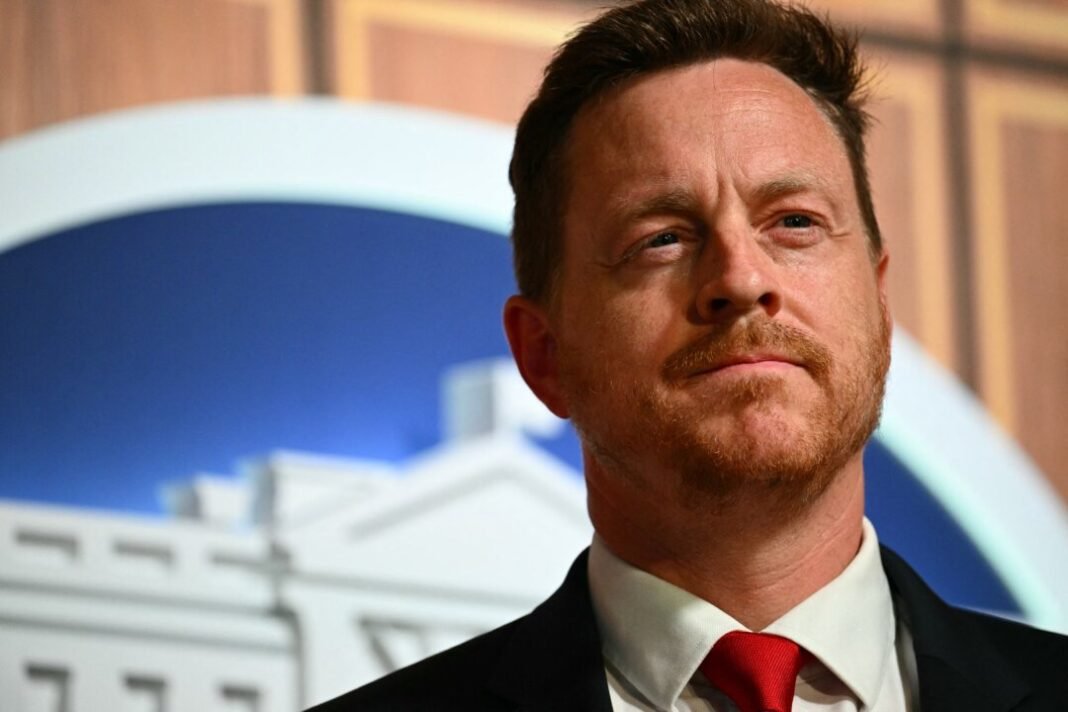
President Donald Trump’s nominee to be the second‑in‑command at the Department of Health and Human Services defended the measles, mumps and rubella (MMR) vaccine during a contentious confirmation hearing on September 15. The hearing took place in Washington.
Chris Klomp, the department’s current chief counselor, told lawmakers that the MMR shot “is the single most effective public health tool that we have against measles.” He emphasized its proven impact on preventing disease outbreaks.
He declined to give the same endorsement to the influenza vaccine, noting its effectiveness is lower than that of the MMR formulation. He said the flu shot’s lower efficacy makes it a less reliable option.
“I do not believe, based on the preponderance of evidence I have seen, that MMR vaccines cause autism,” Klomp said, rejecting the long‑debunked claim. He stressed that the scientific record shows no causal link.
He added that while the cause of autism remains unknown, “that should concern us greatly, and we need to understand that answer because it affects millions.” He called for greater research into the underlying reasons.
In response to Senator Raphael Warnock, Klomp said Kennedy had backed his selection despite frequent disagreements on vaccine policy. He noted the political differences did not affect his support for the nomination.
Senator Ron Wyden warned that measles cases have surged to their highest level since 1991, blaming Kennedy’s recent remarks for the rise. He argued that the comments contributed to declining vaccination rates.
A department spokesperson reiterated that “vaccination remains the most effective way to prevent measles,” and urged individuals to consult their health providers. The statement underscored the administration’s consistent messaging.
Klomp noted that MMR vaccination rates began falling before Kennedy took office, but stressed the administration’s “absolute stance” to strongly encourage immunization. He said the trend predates the current leadership.
He admitted he is not a vaccine expert and does not know the current ingredients of the measles component, saying the earliest versions used tissue from decades‑old abortions but that today’s formulation does not. He emphasized his limited knowledge of vaccine composition.
Klomp acknowledged public safety concerns, saying the department is studying vaccine safety and will not “sweep questions under the rug.” He pledged transparency in addressing safety issues.
He also supported Trump’s proposal for standalone measles, mumps and rubella shots, a plan backed by several Republican senators. He said the approach would simplify vaccination efforts.
Senator Todd Young said Klomp is “completely and well‑qualified” for the deputy secretary role, while Senator Mike Crapo praised his qualifications during the hearing. Both Republicans highlighted his legal and policy experience.
Senator Ron Wyden and other Democrats remain unconvinced, citing a lack of public details on negotiations with pharmaceutical companies. They argue that undisclosed deal terms hinder accountability.
Klomp argued that undisclosed deal terms are proprietary, prompting Senator Elizabeth Warren to accuse the administration of keeping pharma deals secret. He maintained that the confidentiality is necessary to protect commercial interests.

