
Portland credits its ‘virtual speed bumps’
Portland introduced the same concept on Southeast Powell Boulevard during late‑night hours, calling it a “virtual speed bump.” The first intersection reduced average speed from 39 mph to 30 mph, the posted limit, according to city manager Peter Koonce. Oregon State University researchers selected the detection system, and professor David Hurwitz said early results are promising but more study is needed.
Cities try to change driver behavior but avoid other problems
Jay Beeber, chief government affairs officer for the National Motorists Association, warns that driver awareness alone may not sustain speed reductions. He argues that without broad education, motorists will simply become frustrated at red lights. He also says simpler, less‑intrusive measures could achieve similar results.
LA briefly tried rest in red, but most cities haven’t
Los Angeles experimented with rest‑in‑red and added feedback signs that turned red when speeding was detected. A 2023 North Carolina study showed a 43 % drop in total crashes when the system ran around the clock. Unlike Albuquerque and Portland, those versions kept lights red by default until vehicles approached, slowing traffic without granting early greens.
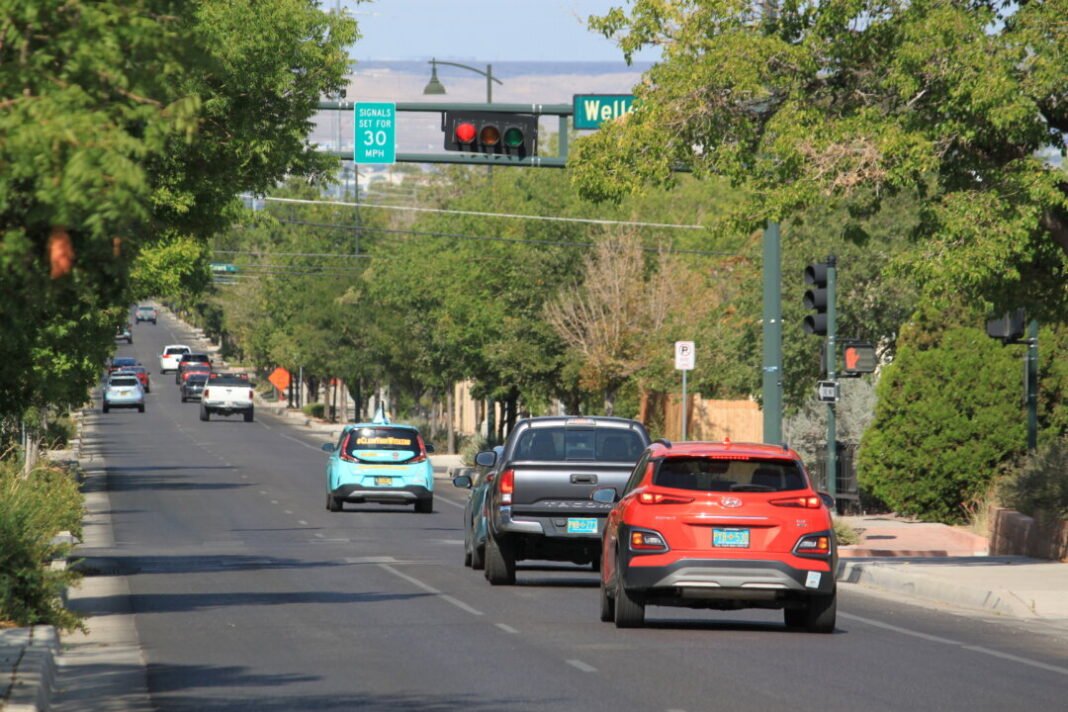
Albuquerque has slashed crashes on Lead and Coal avenues by giving law‑abiding drivers green lights and penalizing speeders with longer reds. The city’s new “rest‑in‑red” system, equipped with speed sensors, rewards drivers who stay within the limit. Officials say the approach has produced a dramatic drop in collisions and injuries along the busy corridor. By rewarding safe behavior rather than punishing violations, the strategy changes driver habits quickly. “We’re finding that the technology itself is kind of its best advertisement,” Jennifer Turner, Albuquerque’s director of municipal development, said. “If you come to Albuquerque right now and you’re driving that corridor, you will learn pretty quickly that if you are speeding, you stop.” Isaac Romero, a resident along the corridor, said he used to hear nightly races and see cars flipping, including one that landed in a neighbor’s yard. Now he notes far fewer high‑speed runs and no more house‑shaking crashes. “If everybody cruises to 30 calmly, I can promise you, you can get every single green light all the way down,” Romero said. “But the moment that one person is there, it changes that whole route for everybody.” Romero says the model could work citywide if all drivers adopt consistent speeds, because a single speeder can reset the entire route. Officials note that speed cameras already reinforce the approach, making it even stronger. By Jeff McMurray

