
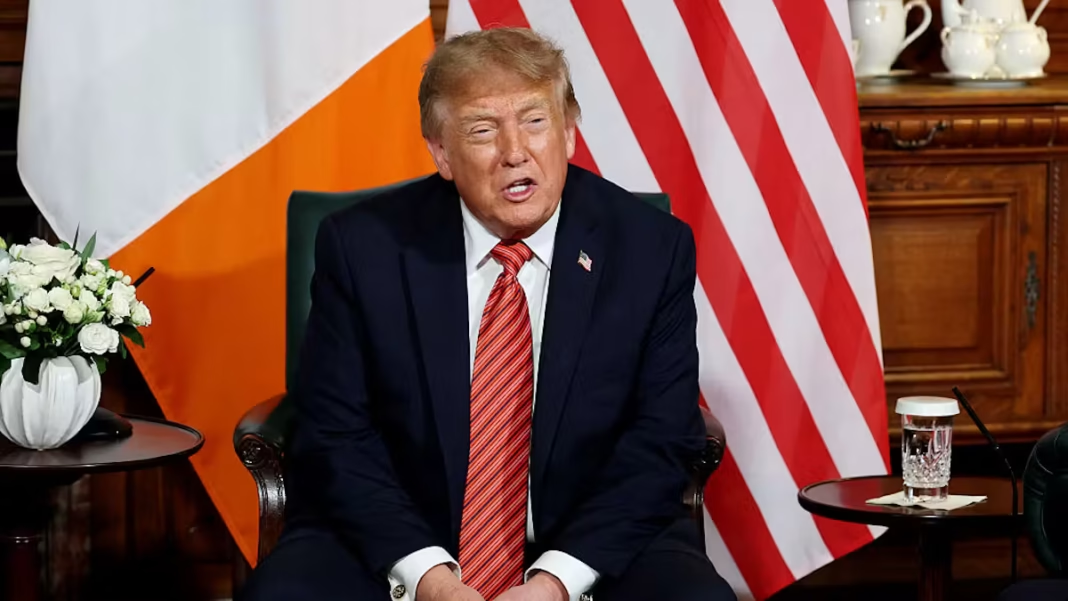
President Donald Trump stunned Dublin on Saturday, declaring he would “love to see” a united Ireland and calling reunification “a fantastic thing.”
Immediate Reactions
Gavin Robinson, leader of Northern Ireland’s Democratic Unionist Party, dismissed the comment on X, saying the constitutional future must be decided by Northern Irish voters, not by remarks from London, Dublin or Washington. He added that Northern Ireland remains part of the United Kingdom because that is the settled democratic will of its people.
Government Position
Prime Minister Andy Burnham said there is currently insufficient public support for a referendum. A vote is therefore not on the table, and the United Kingdom’s stance remains unchanged.
Historical Context
Northern Ireland’s constitutional status has been a flashpoint since The Troubles, when 3,600 people died over three decades of violence between nationalists seeking unity and unionists favoring UK membership. The 1998 Good Friday Agreement established consent, requiring a majority vote before any change can occur.
Trump’s Remarks and Limits
Trump acknowledged the sensitivity, saying there is “no good answer” and that he would “worry about it tomorrow,” while insisting Irish unity would still be “a very cool thing.” He added that any change would ultimately require British involvement.
Background on Previous Comments
Earlier this year Trump suggested a “merger” of Northern Ireland and the Republic, a remark his deputy first minister called a joke. His latest remarks came during a two‑day visit focused on trade and his golf resort in County Clare, where he met Taoiseach Micheál Martin and Irish President Catherine Connolly.
While Trump’s statement sparked immediate criticism and cheers from Irish nationalists, analysts note no immediate policy change and that any move toward unity would require a referendum approved by voters. The reaction underscores the enduring sensitivity of Northern Ireland’s constitutional status.

