
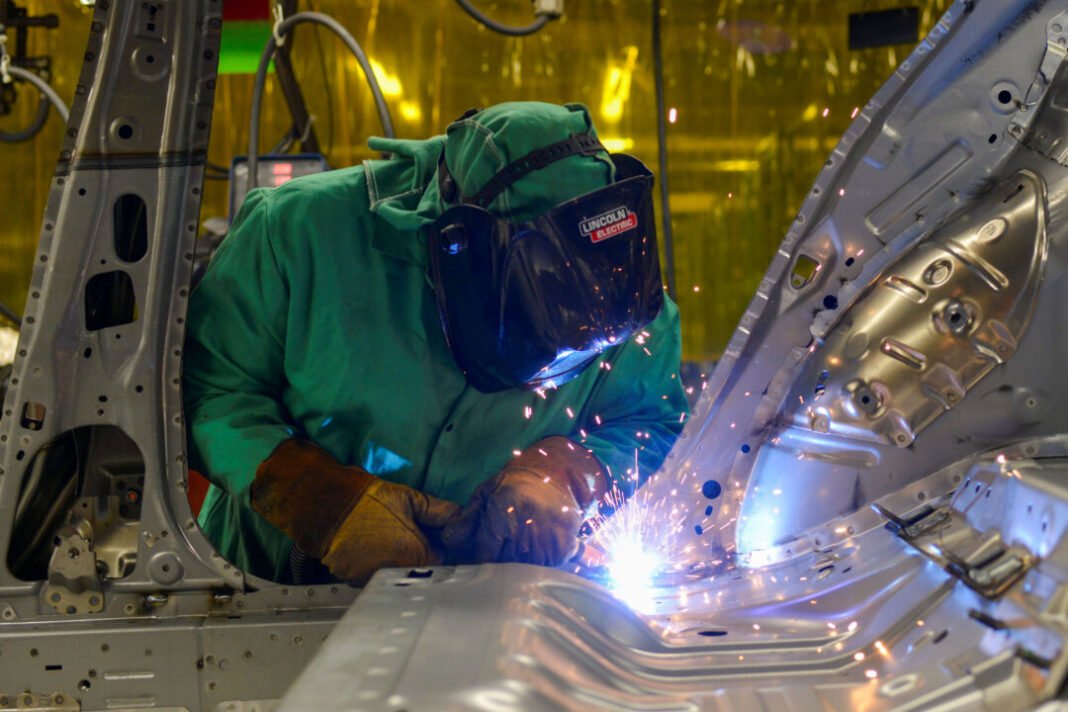
The United States must fill roughly 1.7 million skilled‑trade positions each year through 2035, a gap that threatens workers who fear AI will take their jobs.
A new report from Jobs for the Future, released Sept. 30, says rising demand and a shrinking labor pool drive the surge.
Leaders gathered at the Ford Accelerate Summit this week to discuss practical fixes for the hiring squeeze.
What Counts as a Skilled Trade
Skilled trades include manufacturing, repair, fabrication, raw material extraction, equipment servicing, and construction and infrastructure upkeep.
These jobs involve hands‑on, physical work and require specific trade skills that set them apart from unskilled manual labor.
Training comes through registered apprenticeships and on‑the‑job and off‑the‑job programs that demand time from both employers and workers.
The model creates a steep entry barrier but builds expertise.
A Hiring Squeeze
The U.S. added only 29,000 jobs in September, far below the 90,000 economists expected, highlighting a broader slowdown.
The modest gain contrasts sharply with the 1.7 million annual openings projected for skilled trades through 2035.
Manufacturing’s return to domestic production, infrastructure projects, and the data‑center boom are spurring demand for tradespeople.
At the same time, retirements and the limited pipeline of new workers shrink the supply.
Training requirements and high costs deter entrants, while fewer experienced mentors reduce the flow of new talent.
Consequently, the number of apprentices entering the field falls short of demand.
Seeking Solutions
Ford CEO Jim Farley convened the first national dialogue on the essential economy at the summit, urging a cooperative effort.
He warned that societal hesitancy to celebrate trade careers hampers recruitment.
Mike Rowe of the mikeroweWORKS Foundation noted that for every two workers entering the trades, five leave, citing a 250,000‑person shortage in shipbuilding alone.
He emphasized the scale of the problem across multiple sectors.
Former Labor Secretary Lori Chavez‑DeRemer said the federal government recognizes the urgency and must ensure diverse educational options are available.
She emphasized the need for all stakeholders to be at the table.
TIAA’s Thasunda Brown Duckett and Ford Credit’s Cathy O’Callaghan called for stronger financial support for essential‑economy workers and businesses.
They stress tools for financial security and dignified retirement.
Briones Consulting’s Julio Briones argues the core issue is retention, not just recruitment.
He cites that only 55 of every 100 needed workers are trained, 48 of 100 apprentices finish, and just 29 remain in the trade after five years.
He urges employers to examine the entire workforce funnel, from interest to long‑term career sustainability.
Simply attracting more people will not close the gap without improving retention.
The trades offer a viable path to stable, well‑paid work without a four‑year degree, but promotion alone will not solve the shortage.
Efforts must move workers from interest to training, employment and sustainable careers.

