
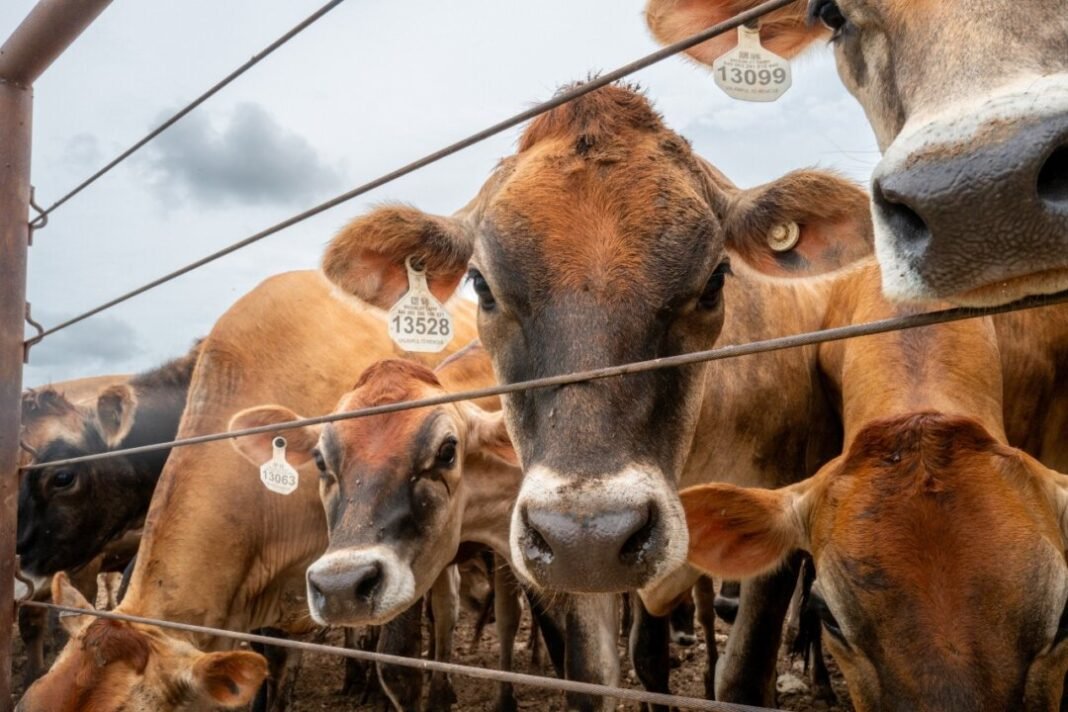
Agriculture Secretary Brooke Rollins announced Monday a new USDA package designed to rebuild the nation’s cattle herd, which is at its lowest level in 75 years. The Ranchers First Initiative will provide new insurance options, loans for smaller processors, and expanded disaster aid for conserved grasslands.
The United States entered 2026 with 86.2 million cattle and calves, the smallest inventory since the early 1950s, according to USDA data.
Encouraging Ranchers to Rebuild Herds
The initiative urges ranchers to retain more young female cattle for breeding instead of selling them for slaughter.
USDA will create a Beef Retention and National Development endorsement under its Livestock Risk Protection program.
If the market value of a slaughter animal exceeds its breeding value, the insurance will cover the difference.
The goal is to lower the financial risk ranchers face when deciding whether to sell high‑priced cattle or hold them for future calves.
By insuring breeding value, the program seeks to stabilize revenue streams.
USDA will expand Emergency Conservation Program use on land in the Grassland Conservation Reserve Program after wildfires and other disasters.
The added assistance will let ranchers quickly repair fences, water systems and other infrastructure, reducing long‑term loss risk.
Expanding Local Beef Processing
The department will launch a guaranteed‑loan program under its SPUR initiative to boost small and regional meat processors.
Loans can fund cooperatives, expand existing businesses and broaden livestock handling capacity.
The move follows a prior SPUR effort that allocated up to $500 million to independent and regional beef slaughter facilities.
A new Regional Processor Continuity Effort will strengthen regional processing operations and make the beef supply chain more resilient.
Recent plant‑closure announcements could free nearly 20 percent of beef‑processing capacity, creating space for independent processors and new cooperatives.
Four firms—Cargill, Tyson Foods, JBS USA and National Beef Packing—control about 85 percent of U.S. beef processing, highlighting market concentration.
USDA will urge federal and state institutions, including hospitals and prisons, to increase purchases of locally processed American beef.
Herd Growth and Beef Prices
The plan comes as the Trump administration pursues policies to rebuild domestic cattle supplies while aiming to lower beef prices for consumers.
In a Truth Social post Friday, President Donald Trump said he is authorizing legal documents that would let ranchers process their own food, a step he says would break a ‘nasty monopoly’ among large meatpackers.
Current federal food‑safety rules generally bar ranchers from selling meat from animals they slaughter unless the meat passes inspection at a certified facility, with limited exceptions.
At the same time, the administration has increased beef imports as a short‑term measure to curb high prices.
Last week, Trump signed a proclamation raising the allowable amount of lean beef trimmings entering the U.S. by 300,000 metric tons at a reduced tariff, effective September 1 for a 90‑day period.
Industry groups and farming advocates oppose the move, warning that even a brief influx of cheaper foreign beef could undermine long‑term efforts to rebuild domestic herds.

