
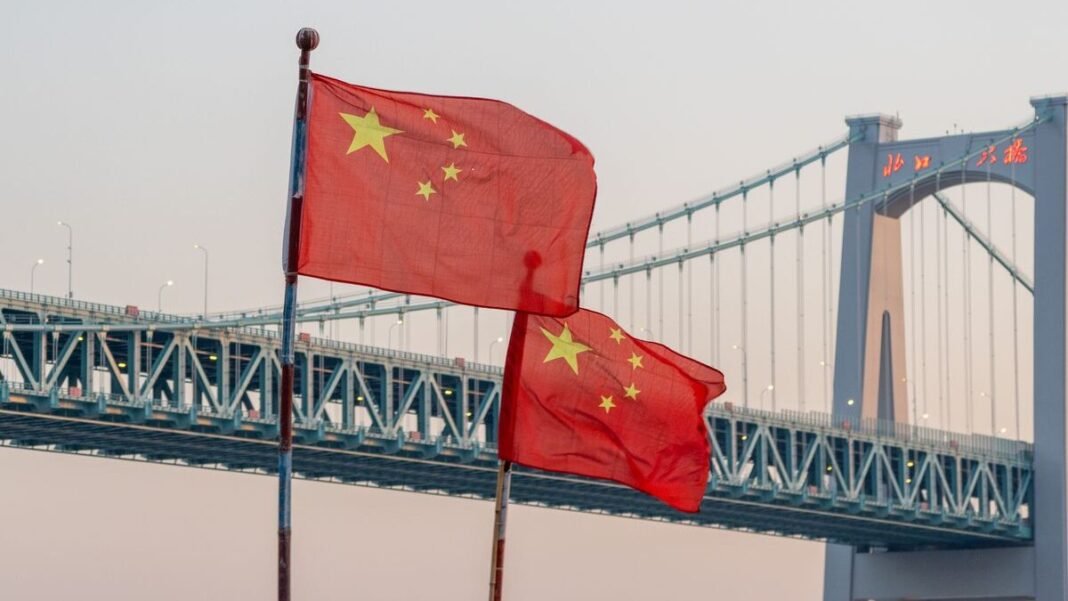
China’s Hostage Diplomacy Targets U.S. Scholar
President Donald Trump’s primetime address warned that China is a direct national security threat, citing declassified documents that allege Beijing stole 220 million U.S. voter files.
American scientist Youlin Chen, a 54‑year‑old naturalized citizen and seismologist who detects underground nuclear tests, has been held in Beijing since November 5, 2024, when authorities arrested him at the capital’s international airport.
Chinese prosecutors waited until May 2025 to formally charge Chen with espionage, an offense that carries life imprisonment or the death penalty, though he has yet to appear in a public trial.
Detention conditions have been harsh: Chen reports prolonged sitting on a hard stool, denial of diabetes medication, and a protein‑deficient diet that has cost him 30 to 50 pounds, according to his wife Yufang Rong.
Rong says interrogators have questioned Chen more than 100 times about his expertise in nuclear seismology, a skill set Beijing may use to improve its ability to conceal underground tests.
The Pentagon’s 2025 Chinese Military Power Report confirms that China’s nuclear arsenal has grown to over 600 warheads, more than triple the 2020 total and on track to exceed 1,000 by 2030.
China’s exclusion from the expired New Strategic Arms Reduction Treaty (New START) has drawn sharp criticism from Washington, which insists any future arms control pact must include Beijing.
Beijing claims compliance with the 1996 Comprehensive Nuclear‑Test‑Ban Treaty (CTBT), yet the Trump administration alleges low‑yield tests were conducted in 2020 using chamber techniques that suppress seismic signatures, a charge China denies.
Chen’s case reflects a broader pattern: just last month, U Min Zin, a U.S. citizen and UC Berkeley doctoral candidate, was arrested in Kunming on espionage accusations while attending an academic conference.
Secretary of State Marco Rubio has designated Chen as “wrongfully detained” and made his release a diplomatic priority, but President Trump’s May summit with Xi Jinping showed that quiet diplomacy alone will not secure his freedom.
Analysts argue that the United States must adopt a decisive strategy: tie high‑level summits and trade talks to tangible progress on detained Americans, impose targeted sanctions on officials involved in hostage diplomacy, and publicly name every wrongful detention case.
Continued Chinese practice risks endangering American scholars, especially those of Chinese descent, and undermines global non‑proliferation efforts.

