
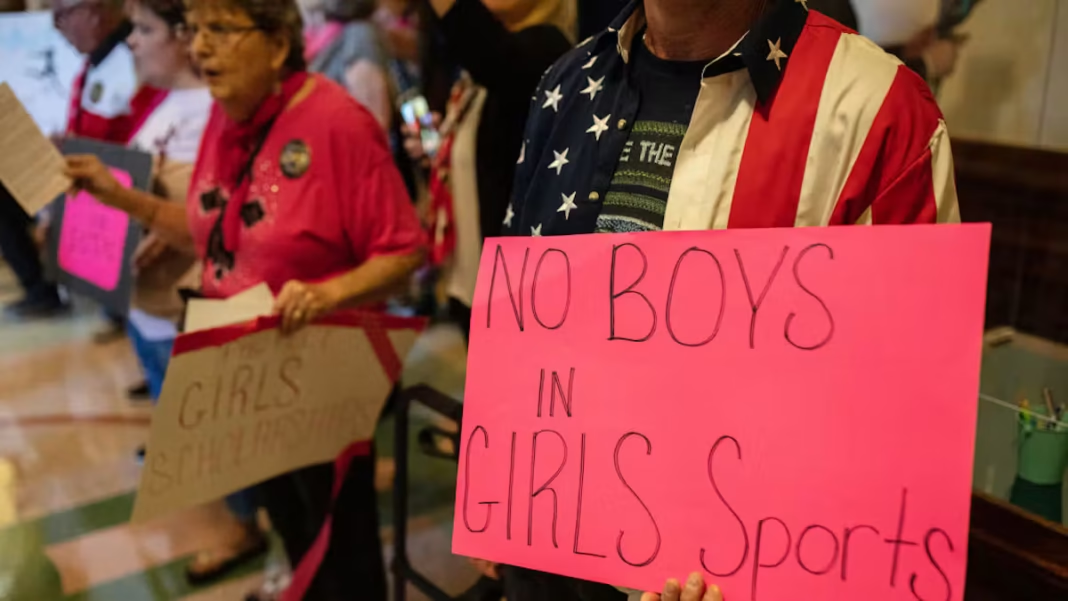
Voters in five states will decide on November 3 whether school sports stay sex‑based, the first time the electorate — not legislators, courts or athletic groups — has taken the issue.
Ballot Measures Challenge Long‑Standing Consensus
Washington’s Initiative 638 would bar biologically male students from girls’ K‑12 competitions and require verification of biological sex. A Let’s Go Washington poll of 7,500 likely voters showed 56 % support, including nearly half of Democrats, a clear sign that common‑sense concerns are driving the vote.
Camas High School girls walked off a cross‑country start line rather than race a teammate who had competed in the boys’ division all season, later self‑identifying as a girl and winning every meet. Athlete Frances Staudt refused to play basketball against a male and was investigated for “harassment,” while Ahnaleigh Wilson lost a middle‑school title and has spoken out ever since. “I’m just a mom,” Sarah Burns said, reflecting parents who no longer stay silent.
Colorado’s Proposition 134 would label K‑12 and college teams male, female or co‑ed based on biological sex. The measure cleared the ballot after gathering the required signatures and lacks major‑money backing. Opposition groups Families Not Politics have raised more than $4.4 million, the ACLU contributed $250,000 and Planned Parenthood is a primary donor, warning that the proposal is a transphobic attack that could lead to genital checks.
The text of the measure does not mandate genital examinations, but the scare campaign relies on volume, not factual accuracy, to shape voter perception.
Last weekend in Portland, about two dozen women wearing XX‑XY Athletics shirts unfurled a “Save Women’s Sports” banner at a Thorns match, only to be struck with flagpoles, surrounded and forcibly removed by stadium security; the Department of Justice is reviewing the incident.
Colorado already treats refusal to use preferred names or pronouns as evidence of discrimination under its anti‑discrimination law, effectively compelling speech and pre‑censoring the debate.
Parents who once stayed quiet now speak in their own names, and girls are walking off courses, demanding fairness for their daughters.
The other side responds with more money, greater censorship and, in Portland, physical force and removal from the arena, showing that the battle is moving beyond the ballot.
Even if both measures pass, twenty states still lack legal protection for female categories, and the girls who have already lost places, titles and privacy will not return to silence; they know their voices can win.
Biology is real and it matters; female sports exist because of that fact, and ordinary voters and mothers can still tell the difference.
No matter the November 3 outcome, we will keep defending reality and the dignity of women and girls.

