
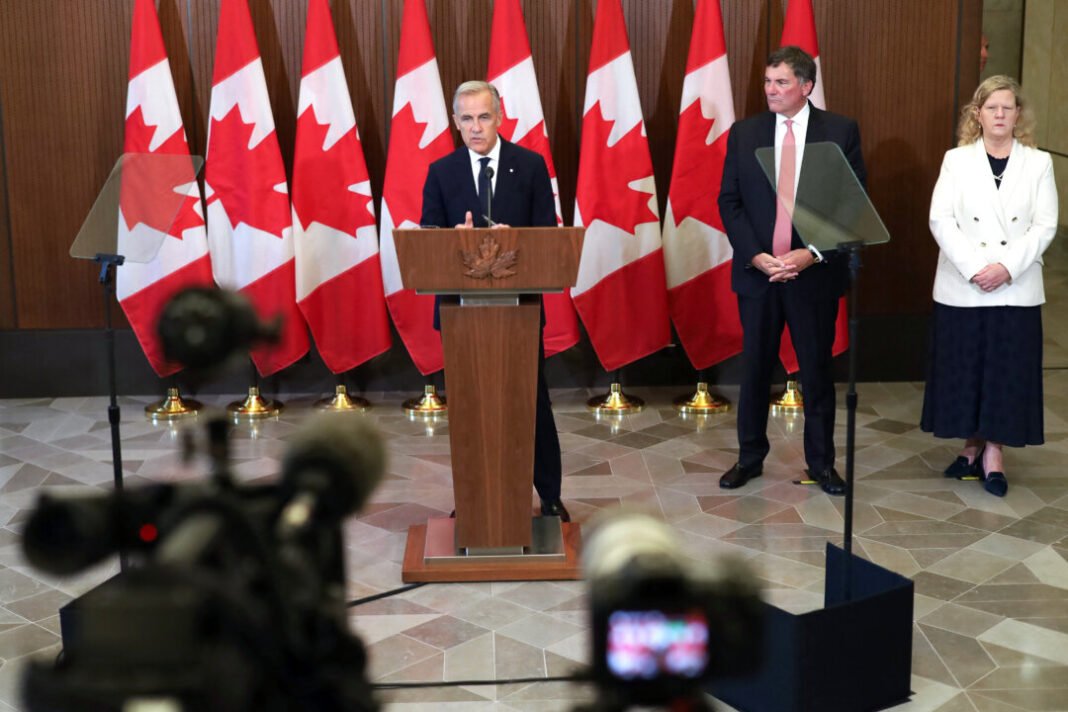
Canadian Prime Minister Mark Carney announced Saturday that retaliatory tariffs on U.S. goods will take effect on September 8.
Trade Talks Collapse Amid New Demands
Carney said the measures were taken reluctantly, noting they would raise costs and limit choices for Canadians, during a press conference in Ottawa on August 22 alongside Trade Minister Dominic LeBlanc and Chief Negotiator Janice Charette.
The United States imposed 50 percent tariffs on select Canadian products less than 24 hours after the two sides failed to reach a trade agreement, a move that followed Canada’s alleged request for new concessions.
Carney accused the United States of trying to restrict Canada’s ability to negotiate other trade deals in the hours before the talks collapsed, calling the language “unacceptable.”
U.S. Trade Representative Jamieson Greer countered on August 21, claiming Canada introduced new demands and walked back prior commitments, which he said stalled the negotiations.
Negotiators had sought to eliminate what the United States described as discriminatory practices against American exports such as automobiles, alcohol and dairy, in exchange for reduced tariffs.
President Donald Trump had delayed the 50 percent tariffs, originally set for August 19, by three days after posting on Truth Social that a deal was imminent and that the Keystone XL pipeline might be revived.
Canadian imports of U.S.-made alcohol fell nearly 81 percent between March 2025 and February 2026, according to White House data, prompting provinces to restock American whiskey and other spirits.
Carney emphasized that the new tariffs serve Canada’s best interest despite the short‑term pain, maintaining confidence that the approach will strengthen the nation’s trade position.

