
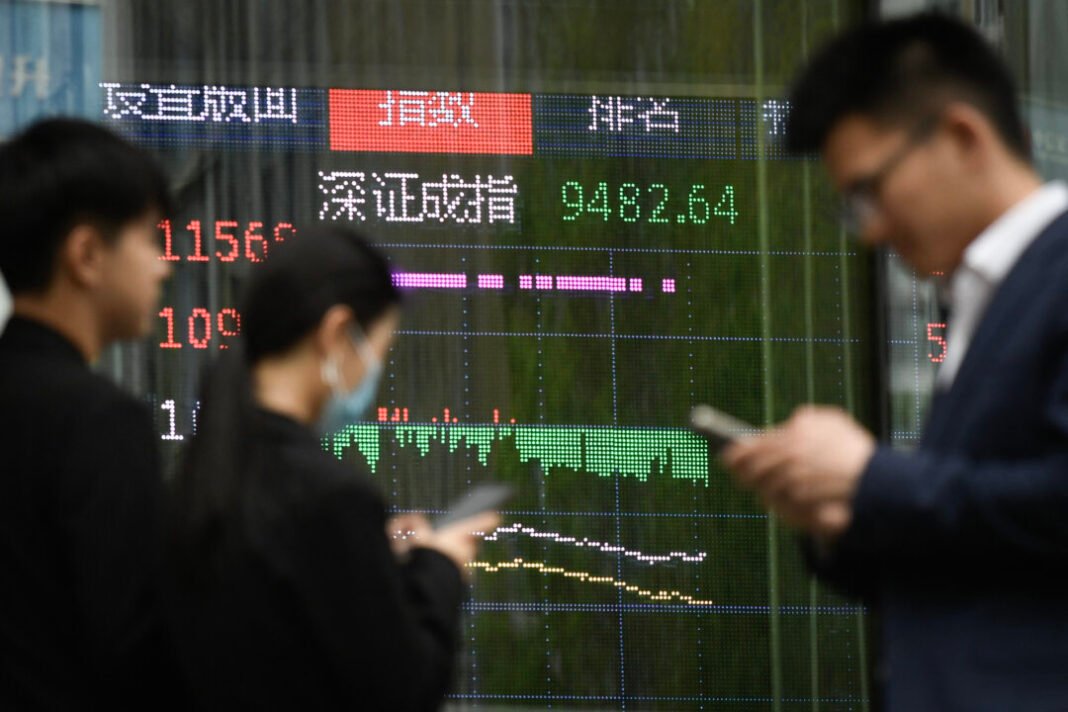
China’s AI stock bubble has imploded, wiping out $480 billion in just four months. Investors who bought into the hype now face steep losses.
AI’s Unsustainable Market Value Concentration
Goldman Sachs says AI stocks represent 42 percent of China’s market value and 57 percent of trading volume, a concentration that defies fundamentals. This concentration inflates valuations far beyond earnings growth.
Valuations Remain Stretched
At its peak, the STAR50 traded at 250 times earnings; even after a 40 percent drop it still trades near 100 times, more than three times the Nasdaq 100’s 30‑times earnings. Consequently, the sector remains dramatically overpriced relative to global peers.
Why the AI Bubble Burst
Reuters cites concerns about demand, export curbs, tax burdens and potential foreign bans, but the real driver is that prices outran profits. Analysts say the selloff began as a valuation correction and profit‑taking before investors questioned whether earnings justified the hype.
A Pump-and-Dump Scheme by the CCP?
No public evidence links the CCP to orchestrating the crash, yet insider selling in June and regulator warnings suggest some insiders viewed the stock surge as overvalued. The retail frenzy, with Biren’s Hong Kong debut oversubscribed 2,300 times, highlights a system where state, officials and regulators overlap, raising fair questions about who sold and when.
The Economy and Consumer Sentiment
ING’s Lynn Song warns that equity losses could trigger a negative wealth effect, further depressing already low household confidence. Meanwhile, third‑quarter GDP rose 4.5 percent on export‑driven chip sales, though the IMF trimmed its 2026 and 2027 forecasts to 4.5 percent and 4 percent respectively.
Where China Goes From Here
Beijing has used state‑directed ETF purchases to cushion the decline, but this only masks deeper structural weaknesses. Vanguard warns an increasingly K‑shaped economy, with resilient exports unable to offset weak consumption, property and investment, while trade barriers and a slowdown in global AI spending add risk.
The CCP is unlikely to deliver broad stimulus to rebuild consumer wealth, as its elite benefit from a collapsing market. The article reflects author opinions and not necessarily those of The Epoch Times.

