
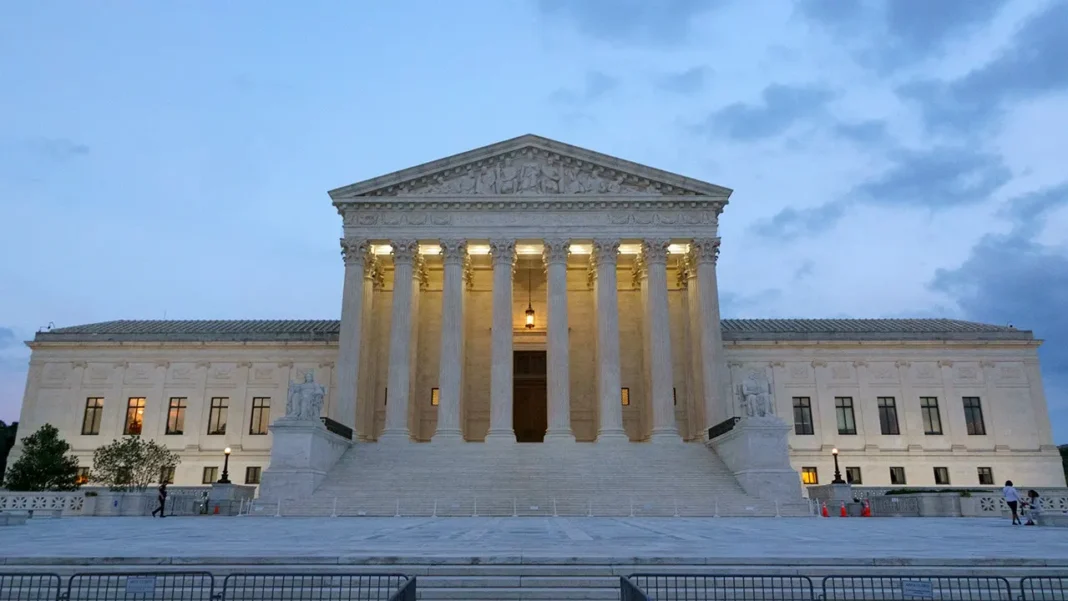
Democrats are escalating a radical plan to expand the Supreme Court, sparking a fierce backlash from legal scholars and former officials. The move has ignited debate across the political spectrum.
Democrats Target the Supreme Court
Trey Gowdy, host of ‘Sunday Night in America,’ denounced Democrats, including Senator Raphael Warnock, for advocating Supreme Court expansion. He highlighted Warnock’s 2022 Georgia victory as proof that Black candidates can win in majority‑white districts without special accommodations. Gowdy asserted that voters prefer the current nine‑justice bench.
University of Pennsylvania professor Michael Mann, Vice Provost for Climate Science, Policy and Action, has demanded that every Democratic candidate sign a pledge to expand the Court or face removal from the party. In a recent podcast interview, Mann said a litmus test is essential: ‘If you care about the environment, you must vote Democrat and commit to packing the Court,’ he declared.
Mann’s call follows a broader push by figures such as former Vice President Kamala Harris and ex‑Transportation Secretary Pete Buttigieg, both of whom have voiced support for sweeping court reforms. They argue that a larger bench will remove obstacles to progressive legislation.
James Carville, a Democratic strategist, advises candidates to conceal the expansion plan from voters, urging them to act without public discussion. He told candidates to wait until they control the presidency and Congress before enacting the change.
Legal scholar Jonathan Turley warns that packing the Court would turn it into a partisan instrument, eroding its role as a check on majority rule and jeopardizing constitutional protections for minorities. He notes that the judiciary was designed to counterbalance popular sentiment and safeguard minority rights.
Mann has faced legal trouble; a defamation case resulted in a $1.1 million sanction after the court found his legal team presented false financial data, and the judiciary ordered him to cover the opponents’ fees. The sanction stemmed from alleged misrepresentations of grant values and other trial misconduct.
The Supreme Court recently overturned the Chevron deference doctrine in Loper Bright Enterprises v. Raimondo, rejecting the notion that agencies lack authority to interpret science. Mann misrepresented this ruling when arguing that the EPA lost its power to regulate based on scientific determinations.
Critics argue that eliminating an independent Supreme Court would remove constitutional limits on far‑left legislation, from wealth taxes to reparations and expansive climate regulations. Such a move would concentrate power in a partisan body, threatening checks and balances.
Senator Elizabeth Warren has repeatedly labeled the Court illegitimate when its rulings conflict with public opinion, a claim Turley says misunderstands the Court’s counter‑majoritarian purpose. He stresses that the judiciary was meant to protect minority viewpoints from majority excess.

