
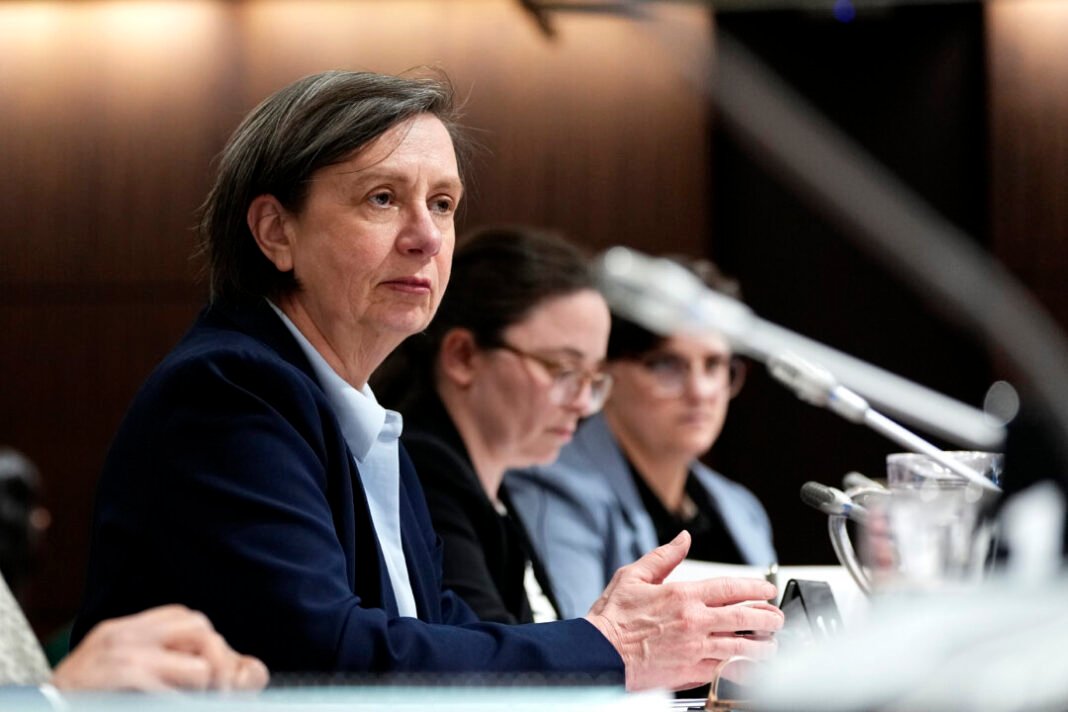
Parliamentary Budget Officer Annette Ryan warns that the federal budget will add $62.3 billion to the deficit and push debt‑servicing costs to $85.5 billion by 2030‑31, making debt payments larger than health transfers and GST revenues.
PBO Report Highlights Fiscal Risks of Record Spending
Ryan’s November 17 review shows the government gained $158.3 billion in new fiscal room over five years, mainly from higher commodity prices that lifted nominal growth and tax revenues. Almost all of that windfall—$151.5 billion—was earmarked for new measures, leaving virtually no reduction in the deficit.
The PBO calculates that without the budget’s spending initiatives the deficit would have been $43.8 billion this year, but the actual shortfall rises to $62.3 billion. Deficits are projected to stay above $52 billion annually through 2030‑31, accumulating $288.7 billion over the period.
Debt‑servicing costs climb from $53.5 billion last year to $85.5 billion by 2030‑31, outpacing every major expense. The PBO notes that debt charges will exceed the Canada Health Transfer beginning this fiscal year and will be 26 percent higher than provincial health transfers and 31 percent higher than GST receipts by 2030‑31.
A one‑point rise in the Bank of Canada’s base rate would add $5.1 billion to debt charges in the first year and $15.8 billion by the fourth, illustrating how quickly higher borrowing costs erode fiscal space.
The budget reduces projected program spending by $62 billion over five years through an “aggregate forecasting adjustment” that lacks any program‑specific targets, prompting the PBO to request further details from the Department of Finance.
Meeting NATO’s 5 percent of GDP defence target by 2035 would increase deficits and debt beyond the PBO’s baseline projections, undermining claims of long‑term fiscal sustainability.
Ryan bluntly summed up the budget: “This budget spends more, invests more and borrows more,” citing questionable allocations such as $5 million for electric‑vehicle projects in Senegal and $560 million for a Brazilian rainforest fund as examples of spending that defy fiscal restraint.
While high oil prices and low interest rates have buoyed the current budget, the PBO warns that reliance on commodities and cheap credit leaves the government vulnerable to trade disputes and rate hikes, urging Canadians to demand the fiscal discipline the government has pledged.
The PBO’s analysis underscores a growing fiscal imbalance that could strain public services and increase borrowing costs for future generations.

