
A New Jersey bill threatens free speech by defining Islamophobia for officials to weigh in discrimination cases. The proposal could chill public debate across the nation.
Bill Expands State Scrutiny of Religious Criticism
Assembly Bill 1146, sponsored by Democratic Assemblyman Joe Danielsen and co‑sponsored by Assemblywomen Verlina Reynolds‑Jackson and Assemblyman Roy Freiman, creates a state definition of Islamophobia for use in civil and criminal reviews. The definition labels hatred, severe disparagement, or violent or physical anti‑Muslim acts as bias‑motivated conduct.
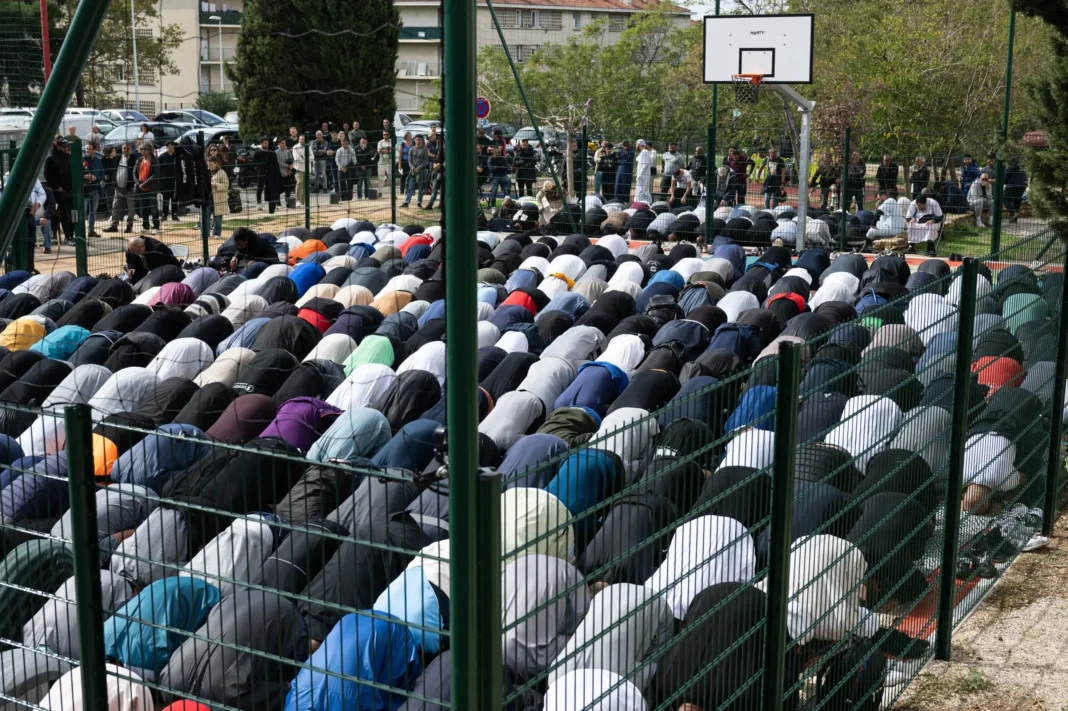
Some French Muslims criticized the report on the Muslim Brotherhood, and the photo shows Muslim men praying in Marseille, France. The image is unrelated to the New Jersey proposal.
The legislation directs officials to consider this definition when assessing alleged violations of existing anti‑discrimination laws. It does not create a new criminal offense for criticizing Islam.
Bill partner and former Navy SEAL Bill Brown warns that the mere prospect of state scrutiny chills public debate, calling the measure a backdoor blasphemy law. He argues that such scrutiny deters people from speaking openly, regardless of the outcome of any case.
Brown, who served in Iraq and studied Arabic at Rutgers, says the bill blurs the line between prejudice against Muslim people and criticism of political movements such as Islamism. His military experience and personal interactions with Muslim classmates shape his view on free expression.
Brown notes the bill explicitly preserves First Amendment and New Jersey constitutional protections, stating it creates no new criminal offense for criticizing Islam. He emphasizes that the law merely guides officials in evaluating existing policies.
Fox News Digital contacted Danielsen and his three co‑sponsors but received no comment. The lack of response leaves the bill’s intent open to interpretation.
The definition cites examples such as forcing hijabs off women, blaming Muslims collectively for individual crimes, and discriminatory treatment. These scenarios illustrate how the law could expand the scope of bias investigations.
Brown stresses that true diversity requires diversity of thought, insisting Americans must remain free to challenge ideas they oppose. He warns that limiting speech undermines the democratic fabric.
National Debate Over Religious Definition Intensifies
The Trump administration’s DOJ recently expanded religious liberty protections after decisive Supreme Court rulings, signaling a federal push to shield faith‑based expression. This move reflects a broader trend of legislatures grappling with faith and free speech.
In Connecticut, a lawsuit threatens a nativity display at the state capitol, arguing the exhibit violates the Establishment Clause. The case underscores ongoing clashes over religious symbols in public spaces.
France’s recent crackdown on free speech, framed as a fight against extremist truth‑telling, illustrates how government definitions can stifle criticism. The policy raises concerns about similar overreach in the United States.
Brown’s concerns echo these global trends, as legislators across the country grapple with balancing anti‑discrimination goals against constitutional free speech rights. He warns that misdefining bias could erode the very protections the First Amendment guarantees.

