
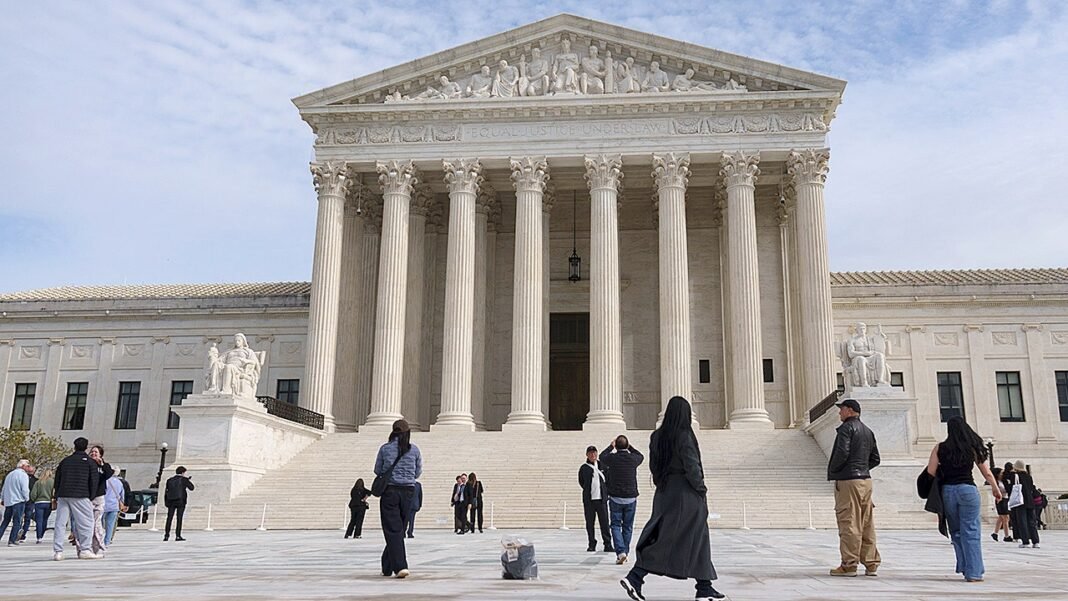
Former Trump trade advisor Peter Navarro is asking the Supreme Court to overturn his contempt conviction, a move that could reshape how Congress enforces subpoenas. He served four months in prison for refusing to comply with a Jan. 6 committee subpoena.
Navarro Petitions Supreme Court to Overturn Contempt Conviction
Navarro, who served four months in federal prison for contempt, filed a petition with the Supreme Court last month, arguing that the lower courts wrongly required proof he knew he was breaking the law. He contends that the statute’s language demands a willful intent, a standard the D.C. Circuit ignored.
The D.C. Circuit held that refusing a subpoena violates federal law regardless of a defendant’s mistaken belief, and that only the president can invoke executive privilege under Article II. Trump never granted Navarro that protection, the panel said.
Counsel Abhishek Kambli argues the D.C. Circuit misread the statute, citing United States v. Murdock, which allowed a sincere mistaken belief to defeat a willful requirement. He says a Supreme Court ruling in Navarro’s favor would curb the weaponization of congressional subpoenas.
The House voted to hold Navarro in contempt, but Kambli says the Jan. 6 committee bypassed the usual executive‑branch accommodation process, sending witnesses straight to prosecution. He warns that a Supreme Court decision could limit future prosecutions for contempt.
With Democrats poised to take control of Congress after the 2026 midterms, lawmakers have threatened investigations into Trump officials, while Republicans retain power until January 2027. Kambli says the petition would protect officials from lawfare and preserve the balance between branches.
The petition follows the Supreme Court’s vacatur of Steve Bannon’s contempt conviction, a parallel case that also hinged on executive privilege. Conservative lawyer Mike Davis, founder of the Article III Project, filed an amicus brief urging the Court to end what he calls ‘lawfare.’
Kambli told Fox News Digital that requiring proof of willful intent would reduce prosecutions and prevent congressional subpoenas from being used as political weapons. He argues the decision would benefit the nation’s long‑term politics.

