
Poland’s Constitutional Crisis Escalates as President Turns Plane Back
Poland’s President Karol Nawrocki cut short a Senegal trip after a late‑night clash at the Constitutional Tribunal, reviving a showdown over Prime Minister Donald Tusk’s rule‑of‑law reforms. The incident underscores deepening tensions between the presidency and the ruling coalition.
The tribunal suspended President Bogdan Święczkowski, a move Tusk’s allies claim restores judicial independence, while critics call it an unconstitutional power grab. The suspension has intensified public protests and polarized the nation.
Marcin Przydacz, head of the International Policy Bureau in Nawrocki’s office, told European TV that even lawyers close to the Tusk government say there is no legal basis for the suspension. Legal experts say the move may violate constitutional provisions on judicial independence.
Diplomatic fallout followed, with at least three ambassadors resigning, including U.N. representative Krzysztof Szczerski, after weekend resignations of the envoys to China and Romania. The resignations signal growing international concern over Poland’s democratic backsliding.
Simone Rodan‑Benzaquen, senior envoy at the Foundation for Defense of Democracies, warned that the crisis predates Tusk’s government and cannot be reduced to a partisan dispute. She noted that the dispute reflects a broader institutional crisis that has lingered for years.
Parliament has continued appointing judges, but the tribunal has blocked several from taking office, creating a years‑long stalemate between the executive, presidency and courts. The deadlock has hampered the functioning of the judiciary and raised fears of a constitutional breakdown.
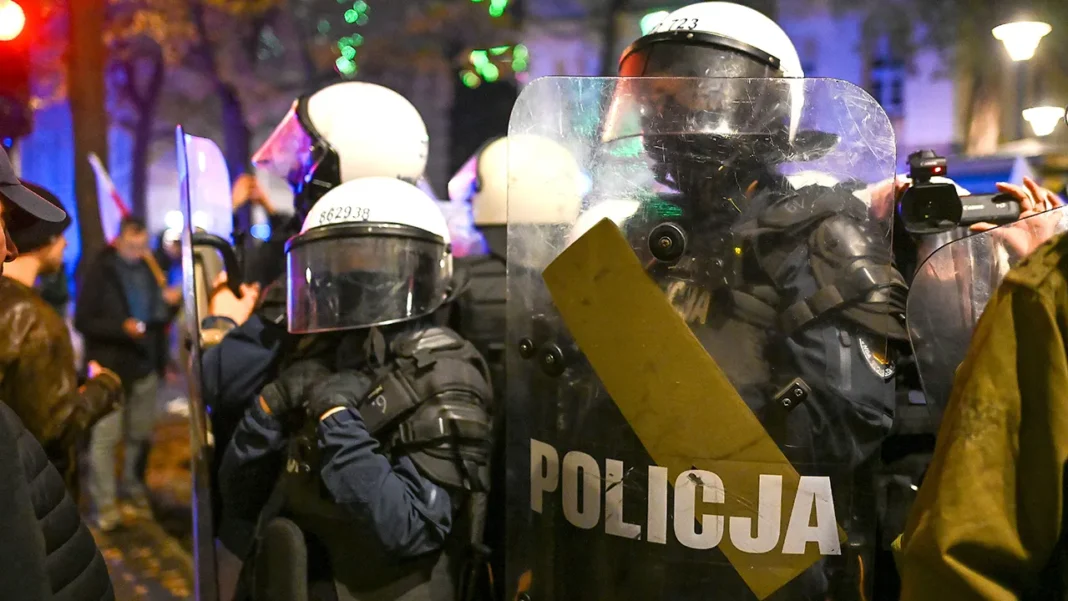
Judge Anna Korwin‑Piotrowska’s suspension of Święczkowski and his deputy sparked street protests and police detentions of three demonstrators. Police reported that the arrests were made after demonstrators attempted to block the court’s entrance.
Nile Gardner of the Heritage Foundation called the action an unprecedented assault and a “Soviet‑style coup” timed while Nawrocki was abroad. He said the timing indicates a deliberate attempt to undermine the president.
Boštjan Udovič of the University of Ljubljana countered that Tusk seeks to restore constitutional order consistent with Poland’s constitution and EU legal standards, not to stage a coup. Udovič argued that restoring proper judicial procedures aligns with both national law and EU requirements.
Tusk defended his actions, saying the president must recognize judges elected by parliament and warned that confrontation could cost Poland dearly. He insisted the constitution obliges the president to appoint judges elected by parliament.
The European Commission backed parliamentary authority to appoint judges, while French opposition leader Marine Le Pen accused Brussels of double standards. Le Pen warned that such tactics threaten the unity of the European Union.
U.S. Ambassador Tom Rose posted that America stands with Poland, urging restraint to protect its democratic future. Rose said the partnership with the United States remains strong despite domestic disputes.
Rodan‑Benzaquen warned that both sides claim to defend the constitution while the courts become the battleground, a dispute that could shape upcoming elections. She warned the outcome will influence voter sentiment before the next election.
Gardner warned Tusk’s tactics resemble the Putin playbook and that his government bears responsibility for a dangerous situation. He added the crisis could destabilize the region if not resolved peacefully.
The Associated Press and Reuters contributed to this report.
Tyler Speicher, an American journalist based in Slovenia with 25 years of experience covering politics and international affairs, authored this article.

