
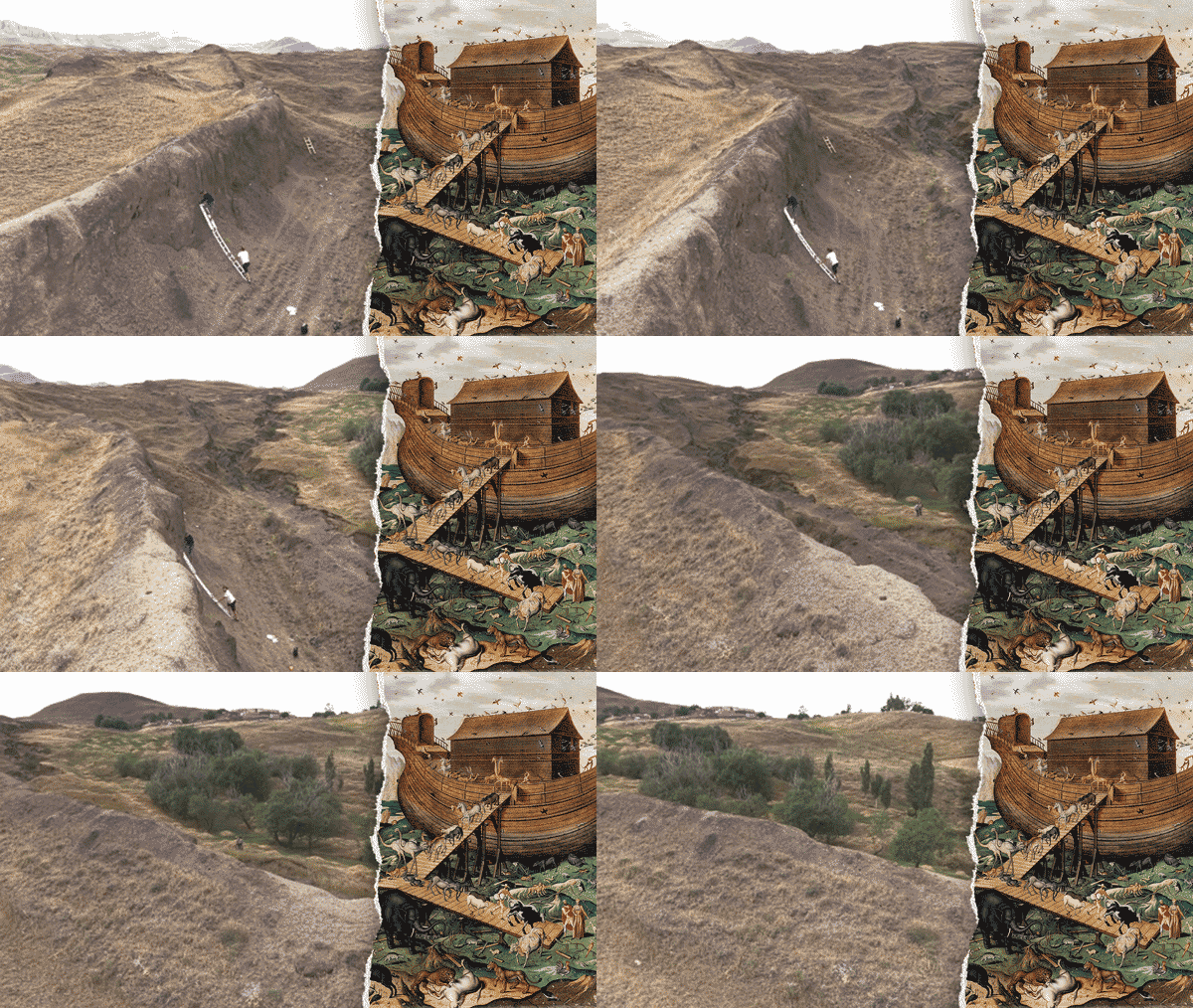
A groundbreaking dig beneath Turkey’s famed Durupınar site has just ended its first full season, drilling more than 60 feet into the ground and hauling hundreds of soil samples for lab analysis.
First Season Yields Surprising Soil Signals
Researchers from Ağrı İbrahim Çeçen University collected over 300 samples from inside and outside the boat‑shaped formation and drilled 20 meters (more than 60 feet) for the first time, revealing only soil rather than solid rock.
Geologists Question Natural Formation Claim
Geologists Lorence Gene Collins and David Franklin Fasold dismissed the Ark hypothesis in a 1996 paper, labeling the structure a natural rock formation.
Jones said the drilling encountered no continuous limestone block, only soil and scattered boulders, challenging the natural formation claim.
Pottery and Settlement Clues Spark Debate
Ancient pottery found beside the formation dates from the early Chalcolithic through the Iron Age, adding cultural context to the debate.
Two nearby settlements, still unexcavated, may have lived alongside the structure if it were indeed a vessel, Jones suggested.
Jones cautioned that laboratory analysis remains ongoing and urged the public not to draw definitive conclusions.
“We still have the lab work to do,” Jones emphasized, adding that skeptics should await results before dismissing the site as merely a rock.

