
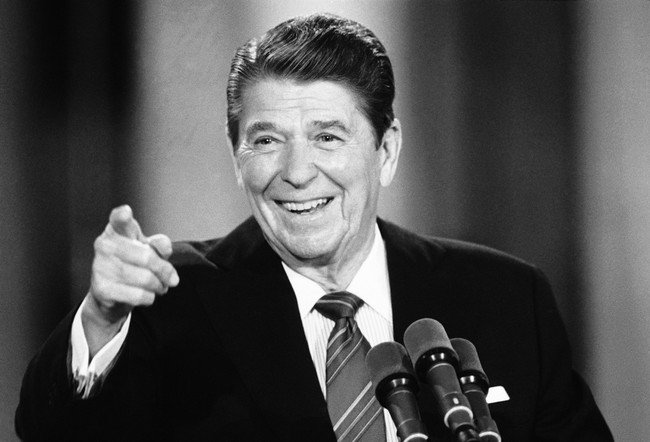
Ford and Reagan Clash at 1976 GOP Convention
On August 19, 1976, a sweltering Kansas City night saw Gerald Ford step up to accept the Republican presidential nomination amid a contested convention. Ford entered with 1,100‑1,110 committed delegates, while Reagan held 1,030‑1,040, leaving roughly 90‑100 uncommitted delegates to decide the outcome.
The primary season had been bitter. Ford secured early wins, but Senator Jesse Helms delivered a surprise upset for Reagan in North Carolina, shifting momentum toward the former governor.
Reagan’s attacks on Ford’s foreign policy resonated. He won primaries in Texas, Indiana, Georgia, Nebraska and California, extending the nomination battle to the convention floor.
Reagan’s decision to pick liberal Pennsylvania senator Richard Schweiker as his running mate alienated his base and stalled his momentum, the Washington Post noted.
Ford clinched the nomination on the first ballot, 1,187‑1,070, securing the party’s standard-bearer.
Ford delivered his acceptance speech, which Fred Barnes called “the best speech of his life,” though insiders believed the gathering would be seen as a failure without Reagan’s presence.
Ford’s aide Bryce Harlow urged Reagan to speak, warning that the party needed unity before the general election, the New York Times reported. Harlow argued that silence would damage the GOP’s chances.
Nancy Reagan opposed the invitation, and Reagan initially refused, saying “It’s Ford’s night,” according to campaign aides. He told aides the moment belonged to Ford.
Ford persisted, inviting Reagan and his wife Nancy to the podium; a reluctant Reagan eventually descended amid chants of “We want Ron!” after the crowd pressed him, the footage showed.
Reagan delivered an unprepared, off‑the‑cuff speech of 771 words that resonated powerfully, analysts said. He spoke without notes, relying on instinct.
Ford thanked him and praised the convention’s hospitality, then turned to the existential threat of nuclear weapons, warning that missiles could arrive in minutes and destroy the civilized world, according to The Free Press.
Reagan referenced a time capsule letter to be opened in 2076, asking if future generations would thank those who prevented nuclear destruction, the Free Press recorded.
He concluded with a call for unity and victory, echoing a recent general’s statement that “there is no substitute for victory,” the Washington Examiner reported.
Supporters recalled the speech as breath‑taking; Ford volunteer Zorine Shirley said Reagan’s words “caught your breath,” per volunteer testimony.
Tevi Troy, senior fellow at the Ronald Reagan Presidential Foundation, wrote that the 1976 speech posed questions that would challenge every generation, the Free Press noted. Analysts warned that America in 2076 could look very different, expressing skepticism about the nation’s future.

