
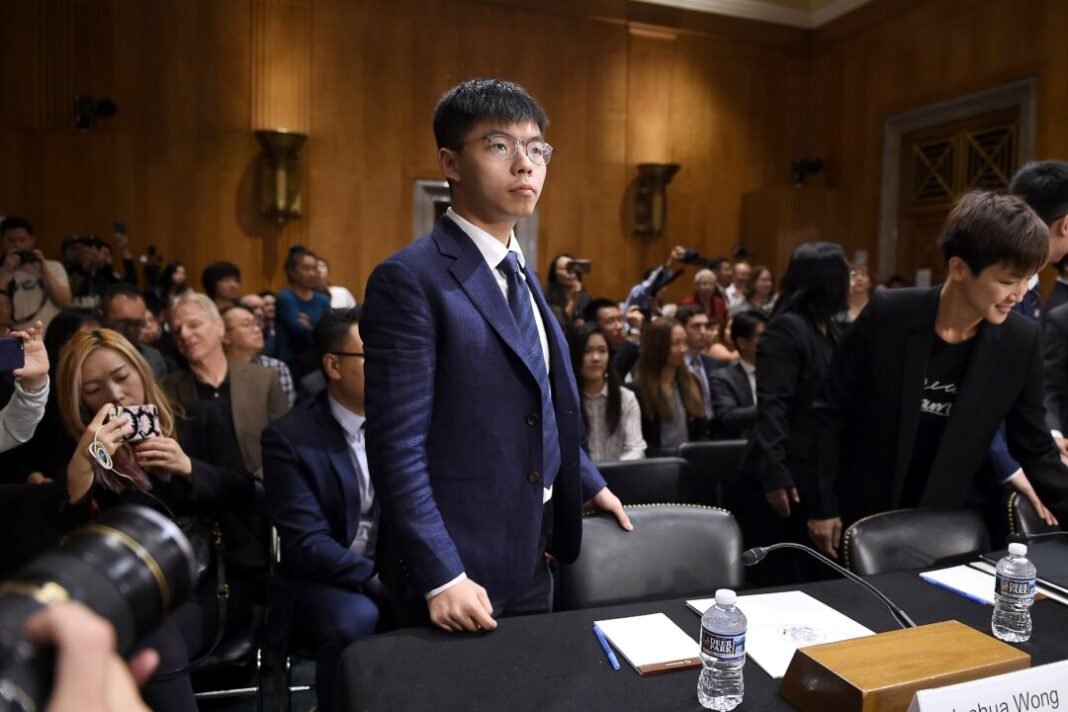
Joshua Wong sentenced to another decade
Joshua Wong was sentenced on Nov. 5 to an additional 10 years in prison, extending his release to late 2036 after a second conviction under Hong Kong’s National Security Law.
From student activist to prisoner
Wong first rose to prominence in 2012 when, at age 16, he led protests against the national education curriculum, a stance that resonated with parents concerned about civic education.
He pleaded guilty to conspiracy to collude with foreign forces, a charge that carries a mandatory ten‑year term under the 2020 National Security Law.
Generational impact
Born in 1996, Wong belongs to the first generation raised entirely under the Sino‑British Joint Declaration, which promised Hong Kong’s way of life would remain unchanged for 50 years.
Many parents in that cohort expected their children to stay and build lives in the city, but the 2019 anti‑extradition protests spurred a wave of emigration.
International involvement
Wong testified before a Canadian parliamentary committee in 2015 via video link and later met with officials in Canada, the United States and Britain, activities conducted openly and publicly.
Those engagements were legal exercises of basic human rights, including travel and public dialogue, according to observers.
Author’s perspective
Mimi Lee, head of the Toronto‑based HongKongers Action Group, says the case reflects a broader generational crisis.
Lee notes that parents who trusted the 50‑year guarantee now question whether the promised stability survives the current political climate.
What the sentence means
The imprisonment signals that outspoken civic participation can now trigger severe penalties, even when actions are conducted in full view of the public and media.
Critics argue the charge of colluding with foreign forces lacks evidence of clandestine activity, pointing instead to open meetings with elected officials.
Looking ahead
Wong’s decision to remain in Hong Kong despite the risk of prolonged incarceration illustrates a willingness to confront a system that appears to be tightening its grip.
Analysts say the case will continue to shape debates about autonomy, diaspora migration, and the durability of the Joint Declaration’s promises.
Views expressed in this article are those of the author and do not necessarily reflect the views of The Epoch Times.

