
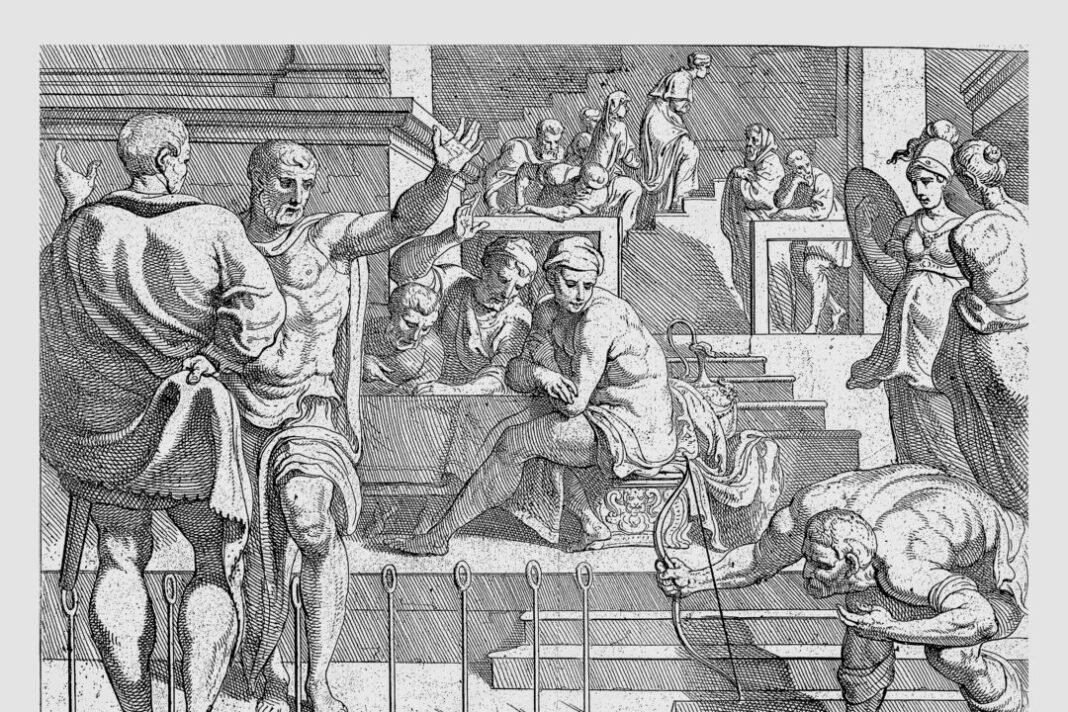
Odysseus returns from years of exile not merely as a king, but as a man whose identity is confirmed through a series of recognition scenes that shift the epic from appearance to reality. His homecoming becomes a lesson in truth emerging only after a painful journey of recognition.
Recognition Scenes as the Engine of Wisdom
The poem opens with Odysseus hidden by Calypso, a literal concealment that mirrors his prolonged absence. He must emerge before he can reclaim his throne, a process the author calls an apokalypsis, a revelation that unfolds gradually.
When he finally reaches Ithaca, Athena disguises him as a beggar, forcing him to test the loyalty of those around him. This incognito strategy lets him assess character before his true status is known.
The first recognition occurs between Odysseus and his son Telemachus. After Athena restores his appearance, the young man doubts his eyes, requiring the father to speak the truth before belief. Accepting that truth marks Telemachus’s transition from orphan to heir.
A more poignant moment arrives with Argos, the blind dog. The animal senses his master’s voice, wags his tail, and dies, illustrating a simple yet powerful affirmation of loyalty.
Eurycleia, the household nurse, identifies Odysseus by a scar from a boar hunt, proving that physical marks endure beyond costume. The scar ties his present self to his past as a war hero.
Penelope’s test is the most demanding. She refuses superficial signs, demanding proof of the secret bed built around an olive tree, a symbol of their unbreakable bond. Her caution reflects fidelity to truth rather than skepticism.
Laertes, the aging father, also seeks confirmation through shared memory of the orchard’s exact count of trees, reinforcing that identity rests on collective recollection.
These sequential recognitions build an ascending pattern that restores Odysseus’s full identity, preparing the household for the final judgment.
The suitors’ mockery of the disguised beggar shows their failure to recognize the rightful king, a mistake the author says the gods will correct. Thus, judgment follows revelation.
The Odyssey therefore argues that true wisdom lies in discerning reality from illusion, a lesson that resonates in modern legal standards where a single lie can invalidate testimony.

